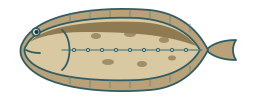
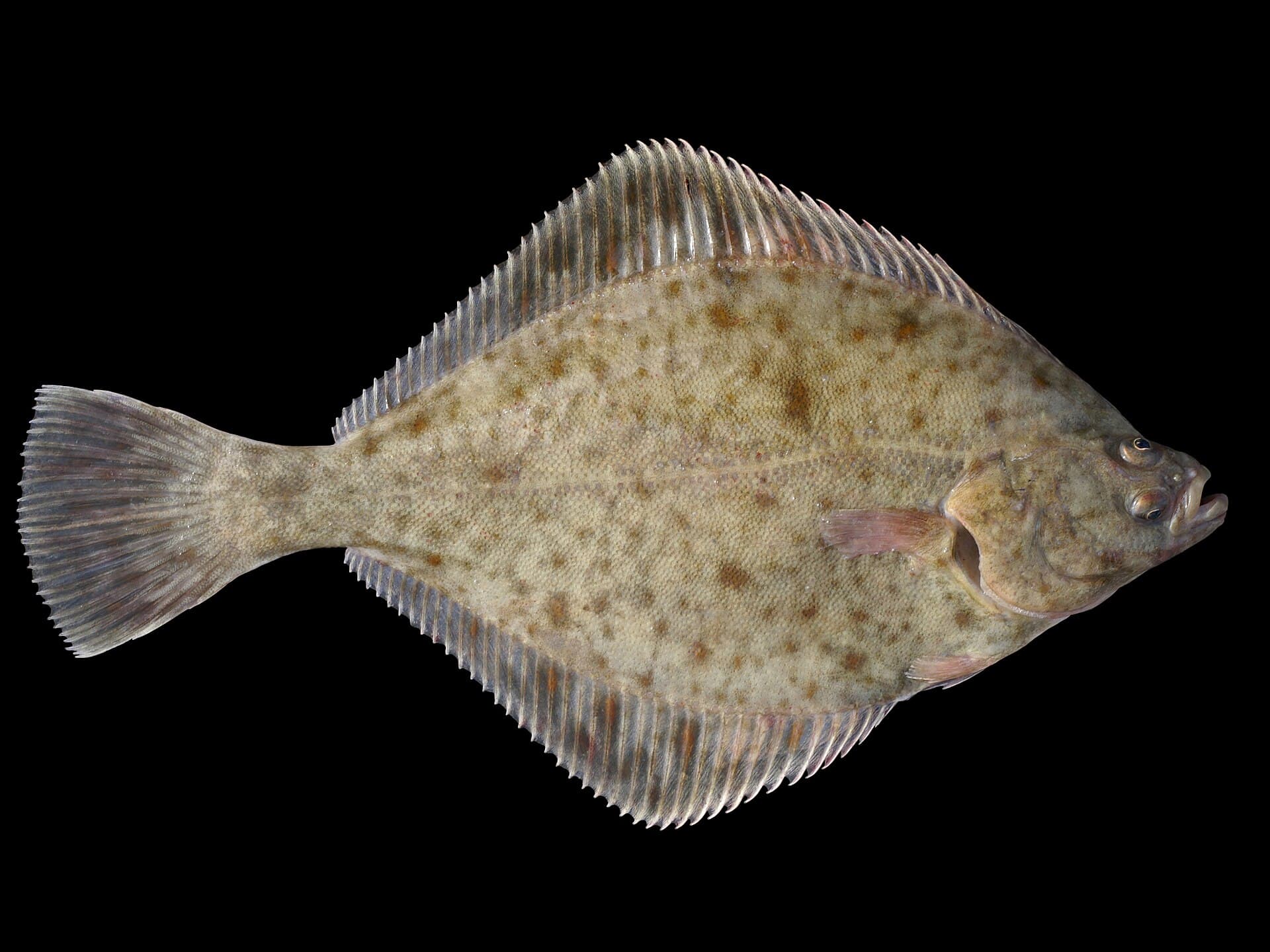
Platichthys flesusSourcesFact from a specialist source · Applies to all regions1EncyclopediaStore norske leksikonskrubbe2ResearchHavforskningsinstituttetSkrubbeAll sources on this page
Also called (Norwegian names)vassflyndreskrubbeflyndreSourcesFact from a specialist source · Applies to all regions1EncyclopediaStore norske leksikonskrubbe2ResearchHavforskningsinstituttetSkrubbeAll sources on this page
Flounder is a common flatfish all along the coast, and it is difficult to tell apart from plaice.SourcesFact from a specialist source · Applies to all regions1EncyclopediaStore norske leksikonskrubbe2ResearchHavforskningsinstituttetSkrubbeAll sources on this page
Southern and Eastern Norway: common.SourcesFact from a specialist source · Applies to all regions1EncyclopediaStore norske leksikonskrubbe2ResearchHavforskningsinstituttetSkrubbeAll sources on this page
Western Norway: common.SourcesFact from a specialist source · Applies to all regions1EncyclopediaStore norske leksikonskrubbe2ResearchHavforskningsinstituttetSkrubbeAll sources on this page
Central Norway: common.SourcesFact from a specialist source · Applies to all regions1EncyclopediaStore norske leksikonskrubbe2ResearchHavforskningsinstituttetSkrubbeAll sources on this page
Northern Norway: common.SourcesFact from a specialist source · Applies to all regions1EncyclopediaStore norske leksikonskrubbe2ResearchHavforskningsinstituttetSkrubbeAll sources on this page
Found in
Bottom
Best season
Jan–Dec
Methods
Bait on the bottom
Rules checked
29 September 2026
Getting started
Your first try for European flounder
One recommended starting point: bait on the bottom from a boat or from shore. More methods are listed under “How to fish”.
1. Place and time
Flounder are often found in brackish water, and are often fished where rivers and streams run out.SourcesFishing tip from a specialist source · Applies to all regions2ResearchHavforskningsinstituttetSkrubbe3ExperienceHooked.noHvordan fiske skrubbe – art nummer 27 / 52All sources on this page
Best in Jan–Dec.
2. Tackle
Hook
NJFF recommends small hooks, size 6, because flounder, dab and plaice have small mouths. Hooked writes that flounder are neither afraid to bite nor so picky that the hooks need to be particularly small.SourcesTackle advice from a source of experience · Applies to all regions3ExperienceHooked.noHvordan fiske skrubbe – art nummer 27 / 524OrganisationNorges Jeger- og FiskerforbundSlik får du fisk i saltvannAll sources on this page
Rod
A light rod with a soft tip, so that you register the small bites. Alvestad uses 7–8 feet and around 20 lb from a boat.SourcesTackle advice from a source of experience · Applies to all regions4OrganisationNorges Jeger- og FiskerforbundSlik får du fisk i saltvann5ExperienceAsgeir AlvestadFiske etter flyndrer, tips og triksAll sources on this page
→The sinker hangs at the bottom and the hooks with bait on short droppers just above, so the bait lies on or just above the bottom.SourceTackle advice from a source of experience · Applies to all regions6Experienceasgeiralvestad.noSlik fisker du torsk, tips og triksAll sources on this page
→Attach the sinker with a slightly thinner line. If it gets stuck, only the sinker breaks off, and you save the rest of the rig.SourceTackle advice from a source of experience · Applies to all regions6Experienceasgeiralvestad.noSlik fisker du torsk, tips og triksAll sources on this page
→Flounder are often found in brackish water, and are often fished where rivers and streams run out.SourcesFishing tip from a specialist source · Applies to all regions2ResearchHavforskningsinstituttetSkrubbe3ExperienceHooked.noHvordan fiske skrubbe – art nummer 27 / 52All sources on this page
Østfold to Agder (the Skagerrak coast)SourcesFact from a specialist source · Applies to all regions1EncyclopediaStore norske leksikonskrubbe2ResearchHavforskningsinstituttetSkrubbeAll sources on this page
Western NorwayCommon
Rogaland and Vestland, south of StadSourcesFact from a specialist source · Applies to all regions1EncyclopediaStore norske leksikonskrubbe2ResearchHavforskningsinstituttetSkrubbeAll sources on this page
Central NorwayCommon
Møre og Romsdal and TrøndelagSourcesFact from a specialist source · Applies to all regions1EncyclopediaStore norske leksikonskrubbe2ResearchHavforskningsinstituttetSkrubbeAll sources on this page
Northern NorwayCommon
Nordland, Troms and FinnmarkSourcesFact from a specialist source · Applies to all regions1EncyclopediaStore norske leksikonskrubbe2ResearchHavforskningsinstituttetSkrubbeAll sources on this page
NJFF recommends small hooks, size 6, because flounder, dab and plaice have small mouths. Hooked writes that flounder are neither afraid to bite nor so picky that the hooks need to be particularly small.SourcesTackle advice from a source of experience · Applies to all regions3ExperienceHooked.noHvordan fiske skrubbe – art nummer 27 / 524OrganisationNorges Jeger- og FiskerforbundSlik får du fisk i saltvannAll sources on this page
Rod
A light rod with a soft tip, so that you register the small bites. Alvestad uses 7–8 feet and around 20 lb from a boat.SourcesTackle advice from a source of experience · Applies to all regions4OrganisationNorges Jeger- og FiskerforbundSlik får du fisk i saltvann5ExperienceAsgeir AlvestadFiske etter flyndrer, tips og triksAll sources on this page
The assessment covers the coast as a whole. The season can vary locally, and closed seasons may stop the fishing. See the rules further down.
Time of day
The time of day is not documented well enough to give advice.
→Flounder spawn between February and June, earliest in southern areas.SourceFact from a specialist source · Applies to all regions2ResearchHavforskningsinstituttetSkrubbeAll sources on this page
Rules
Minimum sizes and closed seasons
Show rules for
Showing rules for the whole coast. Rules that apply to only part of the coast are labelled.Showing rules for Southern and Eastern Norway (Østfold to Agder (the Skagerrak coast)).Showing rules for Western Norway (Rogaland and Vestland, south of Stad).Showing rules for Central Norway (Møre og Romsdal and Trøndelag).Showing rules for Northern Norway (Nordland, Troms and Finnmark).
→Flounder is not in the Directorate of Fisheries’ overview of minimum sizes for the most common species in recreational fishing.SourceRule from the authorities · Applies to all regions8AuthorityFiskeridirektoratetMinstemål i fritidsfiskeAll sources on this page
→Flounder is not on the Directorate of Fisheries’ overview of protected and partially protected species.SourceRule from the authorities · Applies to all regions9AuthorityFiskeridirektoratetFreda og delvis freda artarAll sources on this page
→It is prohibited to fish closer than 100 metres to fish farms.SourceRule from the authorities · Applies to all regions14AuthorityFiskeridirektoratetGenerelle reglarAll sources on this page
→It is not permitted to use live fish or other live animals as bait.SourceRule from the authorities · Applies to all regions14AuthorityFiskeridirektoratetGenerelle reglarAll sources on this page
→Northern NorwaySeparate local restrictions may apply, for example for the cod fishery in Lofoten.SourceRule from the authorities · Applies to: Northern Norway14AuthorityFiskeridirektoratetGenerelle reglarAll sources on this page
The rules are translated from Norwegian. Only the Norwegian text and the authorities’ own pages (in Norwegian) are authoritative. Check them before your trip.
Not checked: rules in national parks and other protected areas at sea and local rules adopted by the municipality. The regulations may change, so always check the current rules before your trip.
→The skin is rough with bony knobs, mostly along the lateral line.SourcesFact from a specialist source · Applies to all regions1EncyclopediaStore norske leksikonskrubbe2ResearchHavforskningsinstituttetSkrubbeAll sources on this page
→May have red spots like plaice, but not as strongly red. Flounder and plaice can hybridise.SourceFact from a specialist source · Applies to all regions2ResearchHavforskningsinstituttetSkrubbeAll sources on this page
→Like the other flatfish in the family, the flounder is right-eyed, but about 30 per cent of individuals are left-eyed.SourcesFact from a specialist source · Applies to all regions1EncyclopediaStore norske leksikonskrubbe2ResearchHavforskningsinstituttetSkrubbeAll sources on this page
Size
→Rarely grows longer than 30 cm, but can reach 60 cm. Store norske leksikon gives up to 4 kg, the Institute of Marine Research 2.9 kg.SourcesFact from a specialist source · Applies to all regions1EncyclopediaStore norske leksikonskrubbe2ResearchHavforskningsinstituttetSkrubbeAll sources on this page
Diet
→Bristle worms, sand hoppers, seaweed lice, shrimp, sand clams, blue mussels, oysters, gobies and sand eels. Older fish prefer molluscs and fish, while younger fish prefer crustaceans.SourceFact from a specialist source · Applies to all regions2ResearchHavforskningsinstituttetSkrubbeAll sources on this page
Life history
→Found from the shore zone to about 120 metres depth, and occurs mostly in shallow water.SourcesFact from a specialist source · Applies to all regions1EncyclopediaStore norske leksikonskrubbe2ResearchHavforskningsinstituttetSkrubbeAll sources on this page
→Often found in brackish water and even in fresh water, especially in summer. This applies mostly to young, immature fish, and the flounder does not spawn in fresh water.SourcesFact from a specialist source · Applies to all regions1EncyclopediaStore norske leksikonskrubbe2ResearchHavforskningsinstituttetSkrubbeAll sources on this page
→In winter most flounders move out into deeper and saltier water.SourceFact from a specialist source · Applies to all regions2ResearchHavforskningsinstituttetSkrubbeAll sources on this page
→At night the flounder stay in shallow water, and by day the big flounders bury themselves in the sand.SourceFact from a specialist source · Applies to all regions2ResearchHavforskningsinstituttetSkrubbeAll sources on this page
→Spawns all along the coast, at 20–40 metres depth, between February and June.SourceFact from a specialist source · Applies to all regions2ResearchHavforskningsinstituttetSkrubbeAll sources on this page
→Can live up to 16 years.SourceFact from a specialist source · Applies to all regions2ResearchHavforskningsinstituttetSkrubbeAll sources on this page
The stock
→The Red List status in Norway is viable (LC).SourceFact from a specialist source · Applies to all regions1EncyclopediaStore norske leksikonskrubbeAll sources on this page
→In the North Sea and the Baltic Sea, flounder is fished commercially. The Institute of Marine Research does not carry out research on the species, and catches have gone down somewhat in recent years.SourceFact from a specialist source · Applies to all regions2ResearchHavforskningsinstituttetSkrubbeAll sources on this page
Experiences
Tips from people who have fished for European flounder
From other anglers
Loading tips …
Experiences from readers. They have been read through, but not checked against sources, and do not count towards the source requirement. You will find rules only in the rules section. Tips are shown in the language they were written in, usually Norwegian.
Share an experience
Have you caught European flounder? Tell us what worked for you.
Sources
What this page is based on
The numbers in the text refer to the sources below. Fishing tips must be confirmed by at least three independent sources. Read about our source requirements.