Coregonus lavaretusSourceFact from a specialist source · Applies to all regions1EncyclopediaStore norske leksikonsikAll sources on this page
Also called (Norwegian names)strømsikgrunnsikbunnsikskaddSourceFact from a specialist source · Applies to all regions1EncyclopediaStore norske leksikonsikAll sources on this page
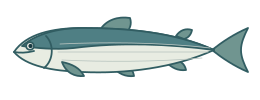
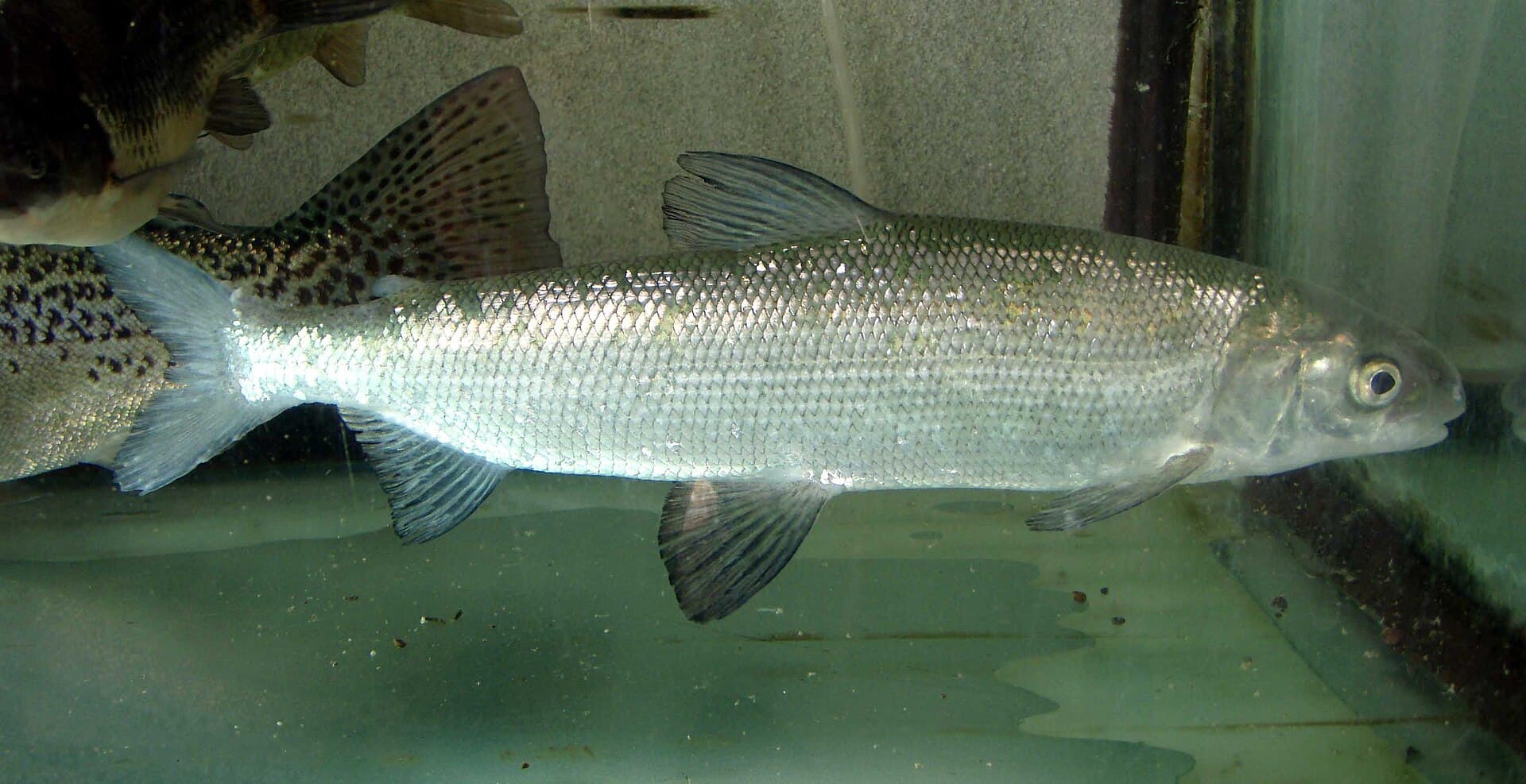
The whitefish is a shiny, unspotted member of the salmon family found in fresh water in many parts of Norway.SourceFact from a specialist source · Applies to all regions1EncyclopediaStore norske leksikonsikAll sources on this page
Southern and Eastern Norway: present. In southern Norway from the Tovdal watercourse eastwards, and in eastern Norway north to Femunden and west to Mjøsa, Randsfjorden, Sperillen and Krøderen.SourceFact from a specialist source · Applies to all regions1EncyclopediaStore norske leksikonsikAll sources on this page
Western Norway: present. Found on Jæren.SourceFact from a specialist source · Applies to all regions1EncyclopediaStore norske leksikonsikAll sources on this page
Central Norway: present. Scattered in Trøndelag.SourceFact from a specialist source · Applies to all regions1EncyclopediaStore norske leksikonsikAll sources on this page
Northern Norway: present. Scattered in Nordland and Troms, and common in Finnmark from the Alta–Kautokeino watercourse eastwards.SourceFact from a specialist source · Applies to all regions1EncyclopediaStore norske leksikonsikAll sources on this page
Found in
Bottom and open water
Best season
Jan–Dec
Methods
Worm on a small hook, Fly, Jigging on the ice
Water
Lake and riverSourceFact from a specialist source · Applies to all regions1EncyclopediaStore norske leksikonsikAll sources on this page
Getting started
Your first try for whitefish
One recommended starting point: worm on a small hook from shore or from a boat. More methods are listed under “How to fish”.
1. Place and time
Best in Jan–Dec.
2. Tackle
Bait
Earthworms or maggots.SourceTackle advice from a source of experience · Applies to all regions2OrganisationNorges Jeger- og FiskerforbundSikAll sources on this page
A length of heavier line between the main line and the bait, which withstands wear better.SourcesTackle advice from a source of experience · Applies to all regions5OrganisationNorges Jeger- og FiskerforbundSlik får du fisk i saltvann6ExperienceNormark Norway (elbe.no)Sjøfiske fra båtAll sources on this page
Where
Where to find whitefish
SurfaceOpen waterBottom
Some populations live along the bottom and eat bottom animals, others in open water.SourceFact from a specialist source · Applies to all regions1EncyclopediaStore norske leksikonsikAll sources on this page Highlighted: bottom and open waterSourceFact from a specialist source · Applies to all regions1EncyclopediaStore norske leksikonsikAll sources on this page.
Around the country
Southern and Eastern NorwayPresent
In southern Norway from the Tovdal watercourse eastwards, and in eastern Norway north to Femunden and west to Mjøsa, Randsfjorden, Sperillen and Krøderen.SourceFact from a specialist source · Applies to all regions1EncyclopediaStore norske leksikonsikAll sources on this page
Western NorwayPresent
Found on Jæren.SourceFact from a specialist source · Applies to all regions1EncyclopediaStore norske leksikonsikAll sources on this page
Central NorwayPresent
Scattered in Trøndelag.SourceFact from a specialist source · Applies to all regions1EncyclopediaStore norske leksikonsikAll sources on this page
Northern NorwayPresent
Scattered in Nordland and Troms, and common in Finnmark from the Alta–Kautokeino watercourse eastwards.SourceFact from a specialist source · Applies to all regions1EncyclopediaStore norske leksikonsikAll sources on this page
Earthworms or maggots.SourceTackle advice from a source of experience · Applies to all regions2OrganisationNorges Jeger- og FiskerforbundSikAll sources on this page
From shore
Fly
→Small wet flies and nymphs in hook size 12–14, in black, brown, grey or olive. Retrieve them slowly.SourceTackle advice from a source of experience · Applies to all regions4ExperienceHooked.noHvordan fisker jeg sik i Finnmark?All sources on this page
Through the ice
Jigging on the ice
→A perch spoon with maggots on the hook, on a leader of 10–15 cm.SourceTackle advice from a source of experience · Applies to all regions7ExperienceVätternvårdsförbundet (vattern.org)Fisketips: sikAll sources on this page
Tips
→Whitefish have fragile mouths. Play the fish gently with a soft rod and a loose drag, and use a landing net.SourceTackle advice from a source of experience · Applies to all regions4ExperienceHooked.noHvordan fisker jeg sik i Finnmark?All sources on this page
When
Season and time of day
Month by month
JanJanuary: Possible
FebFebruary: Possible
MarMarch: Possible
AprApril: Possible
MayMay: Possible
JunJune: Possible
JulJuly: Possible
AugAugust: Possible
SepSeptember: Possible
OctOctober: Possible, spawning
NovNovember: Possible, spawning
DecDecember: Possible
BestGoodPossibleRarely worthwhileSpawningSourceFact from a specialist source · Applies to all regions1EncyclopediaStore norske leksikonsikAll sources on this pageSeasonSourcesFishing tip confirmed by 3 independent sources of experience · Applies to all regions2OrganisationNorges Jeger- og FiskerforbundSik4ExperienceHooked.noHvordan fisker jeg sik i Finnmark?7ExperienceVätternvårdsförbundet (vattern.org)Fisketips: sikAll sources on this page
The assessment covers the country as a whole, and the season can vary locally.
Time of day
The time of day is not documented well enough to give advice.
→Has fairly large scales, no teeth in the mouth and a shiny, unspotted body. The tail fin is clearly forked.SourceFact from a specialist source · Applies to all regions1EncyclopediaStore norske leksikonsikAll sources on this page
→Distinguished from grayling by a smaller, shorter dorsal fin.SourceFact from a specialist source · Applies to all regions1EncyclopediaStore norske leksikonsikAll sources on this page
Size
→Rarely exceeds one kilo, but whitefish over six kilos are known.SourceFact from a specialist source · Applies to all regions1EncyclopediaStore norske leksikonsikAll sources on this page
→In lightly fished populations, whitefish can live over 30 years.SourceFact from a specialist source · Applies to all regions1EncyclopediaStore norske leksikonsikAll sources on this page
Diet
→The fry eat zooplankton. Older whitefish usually graze on bottom animals such as insects, snails, mussels and crustaceans.SourceFact from a specialist source · Applies to all regions1EncyclopediaStore norske leksikonsikAll sources on this page
Life history
→Usually spawns in autumn, most often in October–November, both in running water and on spawning shoals in the lake.SourceFact from a specialist source · Applies to all regions1EncyclopediaStore norske leksikonsikAll sources on this page
→There are often several types of whitefish in the same lake, typically a small plankton eater and a large bottom feeder.SourceFact from a specialist source · Applies to all regions1EncyclopediaStore norske leksikonsikAll sources on this page
The stock
→The whitefish is assessed as Least Concern (LC) on the Norwegian Red List.SourceFact from a specialist source · Applies to all regions1EncyclopediaStore norske leksikonsikAll sources on this page
→Whitefish have been moved beyond their original range. The Norwegian Biodiversity Information Centre has classified them as a regionally alien species with low risk.SourceFact from a specialist source · Applies to all regions1EncyclopediaStore norske leksikonsikAll sources on this page
Experiences
Tips from people who have fished for whitefish
From other anglers
Loading tips …
Experiences from readers. They have been read through, but not checked against sources, and do not count towards the source requirement. You will find rules only in the rules section. Tips are shown in the language they were written in, usually Norwegian.
Share an experience
Have you caught whitefish? Tell us what worked for you.
Sources
What this page is based on
The numbers in the text refer to the sources below. Fishing tips must be confirmed by at least three independent sources. Read about our source requirements.