Salvelinus alpinusSourceFact from a specialist source · Applies to all regions1EncyclopediaStore norske leksikonrøyeAll sources on this page
Also called (Norwegian names)røerøyrbleikegautefiskSourceFact from a specialist source · Applies to all regions1EncyclopediaStore norske leksikonrøyeAll sources on this page
Arctic char are found throughout Norway and are the second most common freshwater fish, after brown trout.SourceFact from a specialist source · Applies to all regions1EncyclopediaStore norske leksikonrøyeAll sources on this page
Southern and Eastern Norway: present.SourceFact from a specialist source · Applies to all regions1EncyclopediaStore norske leksikonrøyeAll sources on this page
Western Norway: present.SourceFact from a specialist source · Applies to all regions1EncyclopediaStore norske leksikonrøyeAll sources on this page
Central Norway: present.SourceFact from a specialist source · Applies to all regions1EncyclopediaStore norske leksikonrøyeAll sources on this page
Northern Norway: present. Sea-run char, which migrate between fresh water and the sea, also occur here.SourceFact from a specialist source · Applies to all regions1EncyclopediaStore norske leksikonrøyeAll sources on this page
Found in
Open water
Best season
Jan–Apr
Methods
Char spoon on the ice
Water
LakeSourceFact from a specialist source · Applies to all regions1EncyclopediaStore norske leksikonrøyeAll sources on this page
Getting started
Your first try for arctic char
One recommended starting point: char spoon on the ice through the ice. More methods are listed under “How to fish”.
→A char spoon (røyeblink) with a baited hook below is a common and effective method for char on the ice.SourcesFishing tip confirmed by 4 independent sources of experience · Applies to all regions3ExperienceHooked.noSlik fanger du påskerøya4ExperienceFluefiske.infoGenerelle tips til isfiske5ExperienceSkitt FiskeRøye- og ørretblinker6OrganisationNorges Jeger- og FiskerforbundRøyeAll sources on this page
A length of heavier line between the main line and the bait, which withstands wear better.SourcesTackle advice from a source of experience · Applies to all regions7OrganisationNorges Jeger- og FiskerforbundSlik får du fisk i saltvann8ExperienceNormark Norway (elbe.no)Sjøfiske fra båtAll sources on this page
Where
Where to find arctic char
SurfaceOpen waterBottom
Ordinary char live in the upper water layers, while dwarf char live deep.SourceFact from a specialist source · Applies to all regions1EncyclopediaStore norske leksikonrøyeAll sources on this page Highlighted: open waterSourceFact from a specialist source · Applies to all regions1EncyclopediaStore norske leksikonrøyeAll sources on this page.
Around the country
Southern and Eastern NorwayPresent
Agder and all of Eastern Norway, including InnlandetSourceFact from a specialist source · Applies to all regions1EncyclopediaStore norske leksikonrøyeAll sources on this page
Western NorwayPresent
Rogaland and VestlandSourceFact from a specialist source · Applies to all regions1EncyclopediaStore norske leksikonrøyeAll sources on this page
Central NorwayPresent
Møre og Romsdal and TrøndelagSourceFact from a specialist source · Applies to all regions1EncyclopediaStore norske leksikonrøyeAll sources on this page
Northern NorwayPresent
Sea-run char, which migrate between fresh water and the sea, also occur here.SourceFact from a specialist source · Applies to all regions1EncyclopediaStore norske leksikonrøyeAll sources on this page
Technique and tackle
How to fish for arctic char
Through the ice
Char spoon on the ice
→A char spoon (røyeblink) with a baited hook below is a common and effective method for char on the ice.SourcesFishing tip confirmed by 4 independent sources of experience · Applies to all regions3ExperienceHooked.noSlik fanger du påskerøya4ExperienceFluefiske.infoGenerelle tips til isfiske5ExperienceSkitt FiskeRøye- og ørretblinker6OrganisationNorges Jeger- og FiskerforbundRøyeAll sources on this page
BestGoodPossibleRarely worthwhileSpawningSeasonSourcesFishing tip from a specialist source · Applies to all regions1EncyclopediaStore norske leksikonrøye3ExperienceHooked.noSlik fanger du påskerøya6OrganisationNorges Jeger- og FiskerforbundRøyeAll sources on this page
The assessment covers the country as a whole, and the season can vary locally.
Time of day
The time of day is not documented well enough to give advice.
→In many places, a lot of char are caught by ice fishing in winter.SourceFact from a specialist source · Applies to all regions1EncyclopediaStore norske leksikonrøyeAll sources on this page
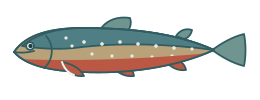
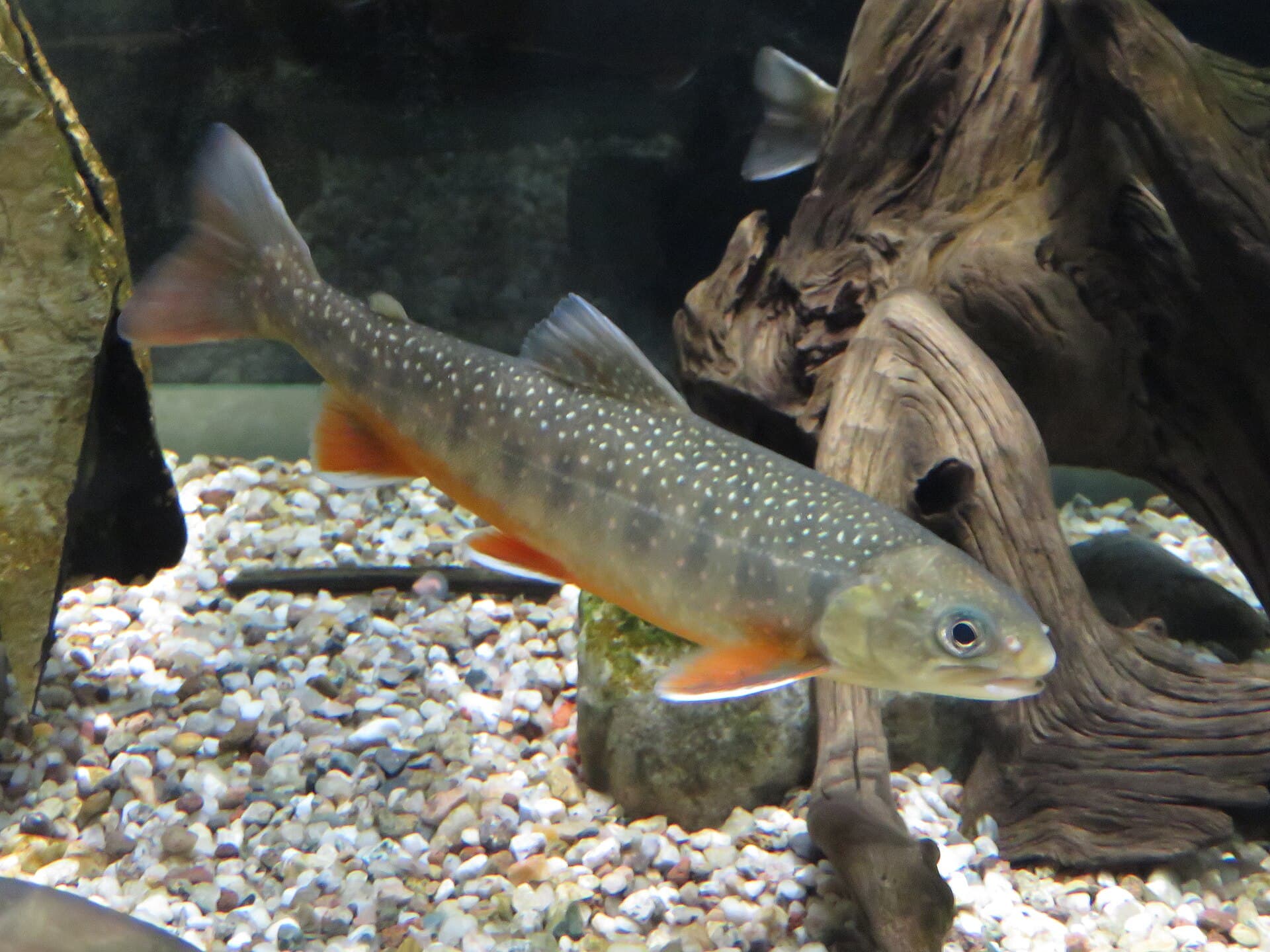
→During spawning the char takes on a splendid colouring with a bright red belly and white-edged pectoral and pelvic fins. It is most striking in large, old fish.SourceFact from a specialist source · Applies to all regions1EncyclopediaStore norske leksikonrøyeAll sources on this page
→The Arctic char is the species with the greatest variation in shape, behaviour and way of life, and occurs in several forms in the same lake.SourceFact from a specialist source · Applies to all regions1EncyclopediaStore norske leksikonrøyeAll sources on this page
Size
→Ordinary char are often small and rarely exceed 30 cm. Where there are not too many char, they can reach 2–3 kg, as in many lakes on Finnmarksvidda.SourceFact from a specialist source · Applies to all regions1EncyclopediaStore norske leksikonrøyeAll sources on this page
→Dwarf char in deep lakes grow slowly and rarely exceed 20 cm.SourceFact from a specialist source · Applies to all regions1EncyclopediaStore norske leksikonrøyeAll sources on this page
Diet
→Ordinary char often feed on zooplankton in open water. Without competition from trout they also eat bottom animals in the shallows.SourceFact from a specialist source · Applies to all regions1EncyclopediaStore norske leksikonrøyeAll sources on this page
Life history
→Depends on cool, clean water and tolerates pollution poorly. It is the most cold-tolerant freshwater fish.SourceFact from a specialist source · Applies to all regions1EncyclopediaStore norske leksikonrøyeAll sources on this page
→Spawns mainly in autumn, usually in lakes, on gravel banks where the female buries the eggs.SourceFact from a specialist source · Applies to all regions1EncyclopediaStore norske leksikonrøyeAll sources on this page
→Readily forms dense populations. If there is too little food for all of them, the fish become thin.SourceFact from a specialist source · Applies to all regions1EncyclopediaStore norske leksikonrøyeAll sources on this page
The stock
→South of StadMany char populations in southern Norway died out because of acidification.SourceFact from a specialist source · Applies to: South of Stad1EncyclopediaStore norske leksikonrøyeAll sources on this page
→The Arctic char is expected to decline because of global warming, and it does poorly alongside pike.SourceFact from a specialist source · Applies to all regions1EncyclopediaStore norske leksikonrøyeAll sources on this page
Experiences
Tips from people who have fished for arctic char
From other anglers
Loading tips …
Experiences from readers. They have been read through, but not checked against sources, and do not count towards the source requirement. You will find rules only in the rules section. Tips are shown in the language they were written in, usually Norwegian.
Share an experience
Have you caught arctic char? Tell us what worked for you.
Sources
What this page is based on
The numbers in the text refer to the sources below. Fishing tips must be confirmed by at least three independent sources. Read about our source requirements.