Skip to content
Fiskemanualen

How to fish for

European plaice

Pleuronectes platessaSourcesFact from a specialist source · Applies to all regions1EncyclopediaStore norske leksikonrødspette2ResearchHavforskningsinstituttetRødspetteAll sources on this page

Also called (Norwegian names)gullflyndreflyndreraudspettekongeflyndreSourceFact from a specialist source · Applies to all regions1EncyclopediaStore norske leksikonrødspetteAll sources on this page

Plaice is a flatfish recognised by its brown, smooth eyed side with red spots.SourceFact from a specialist source · Applies to all regions1EncyclopediaStore norske leksikonrødspetteAll sources on this page

Southern and Eastern Norway: present. The Skagerrak is one of the habitats.SourceFact from a specialist source · Applies to all regions2ResearchHavforskningsinstituttetRødspetteAll sources on this page

Western Norway: present. SourceFact from a specialist source · Applies to all regions2ResearchHavforskningsinstituttetRødspetteAll sources on this page

Central Norway: present. SourceFact from a specialist source · Applies to all regions2ResearchHavforskningsinstituttetRødspetteAll sources on this page

Northern Norway: present. SourceFact from a specialist source · Applies to all regions2ResearchHavforskningsinstituttetRødspetteAll sources on this page

Found in
Bottom
Best season
Jan–Dec
Methods
Bait on the bottom
Rules checked
29 September 2026

Getting started

Your first try for European plaice

One recommended starting point: bait on the bottom from a boat or from shore. More methods are listed under “How to fish”.

  1. 1. Place and time

  2. 2. Tackle

    Hook
    Small hooks, because plaice and other flatfish have small mouths. NJFF recommends size 6.SourcesTackle advice from a source of experience · Applies to all regions3ExperienceAsgeir AlvestadFiske etter flyndrer, tips og triks5OrganisationNorges Jeger- og FiskerforbundSlik får du fisk i saltvannAll sources on this page
    Rod and line from a boat
    A light sea rod of 7–8 feet with a soft tip, around 20 lb (200 g lure weight), and a small reel with 0.20 mm braided line. Mark the tip with tape so you can see small bites.SourceTackle advice from a source of experience · Applies to all regions3ExperienceAsgeir AlvestadFiske etter flyndrer, tips og triksAll sources on this page
    Rod from shore
    Light tackle, but with some length on the rod for long casts. A surfcasting rod of 12–13 feet gives extra-long casts with heavier weights.SourceTackle advice from a source of experience · Applies to all regions3ExperienceAsgeir AlvestadFiske etter flyndrer, tips og triksAll sources on this page
    Beads and spinner blades
    Beads and small spinner blades on the rig give movement and sound. The blade only works when the bait is moved.SourcesTackle advice from a source of experience · Applies to all regions3ExperienceAsgeir AlvestadFiske etter flyndrer, tips og triks4ExperienceVillmarksbutikkenFlyndrefiske fra land og båt – utstyr og tipsAll sources on this page
  3. 3. Rig up: bait rig with a sinker at the bottom

    1. 1Main line. Line from the reel.SourceTackle advice from a source of experience · Applies to all regions6Experienceasgeiralvestad.noSlik fisker du torsk, tips og triksAll sources on this page
    2. 2Droppers with bait. Short side leaders with hook and bait above the sinker.SourceTackle advice from a source of experience · Applies to all regions6Experienceasgeiralvestad.noSlik fisker du torsk, tips og triksAll sources on this page
    3. 3Sinker. At the bottom, keeps the bait down near the seabed.SourceTackle advice from a source of experience · Applies to all regions6Experienceasgeiralvestad.noSlik fisker du torsk, tips og triksAll sources on this page

    How to assemble it

  4. 4. How to do it

Where

Where to find European plaice

Where in the sea European plaice livesEuropean plaice lives in bottom, from 0 to 200 metres depth.

Plaice are found from the shore zone down to about 200 metres (Institute of Marine Research). In summer they stay shallow, and in winter in deeper water (Store norske leksikon).SourcesFishing tip from a specialist source · Applies to all regions1EncyclopediaStore norske leksikonrødspette2ResearchHavforskningsinstituttetRødspetteAll sources on this page Highlighted: bottomSourcesFishing tip confirmed by 3 independent sources of experience · Applies to all regions3ExperienceAsgeir AlvestadFiske etter flyndrer, tips og triks4ExperienceVillmarksbutikkenFlyndrefiske fra land og båt – utstyr og tips5OrganisationNorges Jeger- og FiskerforbundSlik får du fisk i saltvannAll sources on this page.

How to find it

Along the coast

  • Southern and Eastern NorwayPresent

    The Skagerrak is one of the habitats.SourceFact from a specialist source · Applies to all regions2ResearchHavforskningsinstituttetRødspetteAll sources on this page

  • Western NorwayPresent

    Rogaland and Vestland, south of StadSourceFact from a specialist source · Applies to all regions2ResearchHavforskningsinstituttetRødspetteAll sources on this page

  • Central NorwayPresent

    Møre og Romsdal and TrøndelagSourceFact from a specialist source · Applies to all regions2ResearchHavforskningsinstituttetRødspetteAll sources on this page

  • Northern NorwayPresent

    Nordland, Troms and FinnmarkSourceFact from a specialist source · Applies to all regions2ResearchHavforskningsinstituttetRødspetteAll sources on this page

Technique and tackle

How to fish for European plaice

From boatFrom shore

Bait on the bottom

Hook
Small hooks, because plaice and other flatfish have small mouths. NJFF recommends size 6.SourcesTackle advice from a source of experience · Applies to all regions3ExperienceAsgeir AlvestadFiske etter flyndrer, tips og triks5OrganisationNorges Jeger- og FiskerforbundSlik får du fisk i saltvannAll sources on this page
Rod and line from a boat
A light sea rod of 7–8 feet with a soft tip, around 20 lb (200 g lure weight), and a small reel with 0.20 mm braided line. Mark the tip with tape so you can see small bites.SourceTackle advice from a source of experience · Applies to all regions3ExperienceAsgeir AlvestadFiske etter flyndrer, tips og triksAll sources on this page
Rod from shore
Light tackle, but with some length on the rod for long casts. A surfcasting rod of 12–13 feet gives extra-long casts with heavier weights.SourceTackle advice from a source of experience · Applies to all regions3ExperienceAsgeir AlvestadFiske etter flyndrer, tips og triksAll sources on this page
Beads and spinner blades
Beads and small spinner blades on the rig give movement and sound. The blade only works when the bait is moved.SourcesTackle advice from a source of experience · Applies to all regions3ExperienceAsgeir AlvestadFiske etter flyndrer, tips og triks4ExperienceVillmarksbutikkenFlyndrefiske fra land og båt – utstyr og tipsAll sources on this page

Bait

When

Season and time of day

Month by month

  1. JanJanuary: Possible
  2. FebFebruary: Possible, spawning
  3. MarMarch: Possible
  4. AprApril: Possible
  5. MayMay: Possible
  6. JunJune: Possible
  7. JulJuly: Possible
  8. AugAugust: Possible
  9. SepSeptember: Possible
  10. OctOctober: Possible
  11. NovNovember: Possible
  12. DecDecember: Possible
BestGoodPossibleRarely worthwhileSpawningSourcesFact from a specialist source · Applies to all regions1EncyclopediaStore norske leksikonrødspette2ResearchHavforskningsinstituttetRødspetteAll sources on this pageSeasonSourcesFishing tip from a specialist source · Applies to all regions1EncyclopediaStore norske leksikonrødspette4ExperienceVillmarksbutikkenFlyndrefiske fra land og båt – utstyr og tipsAll sources on this page

The assessment covers the coast as a whole. The season can vary locally, and closed seasons may stop the fishing. See the rules further down.

Time of day

The time of day is not documented well enough to give advice.

  • Plaice spawn in deep water in winter and early spring. The Institute of Marine Research gives January–February, Store norske leksikon February to April or May.SourcesFact from a specialist source · Applies to all regions1EncyclopediaStore norske leksikonrødspette2ResearchHavforskningsinstituttetRødspetteAll sources on this page

Rules

Minimum sizes and closed seasons

Show rules for

Showing rules for the whole coast. Rules that apply to only part of the coast are labelled.Showing rules for Southern and Eastern Norway (Østfold to Agder (the Skagerrak coast)).Showing rules for Western Norway (Rogaland and Vestland, south of Stad).Showing rules for Central Norway (Møre og Romsdal and Trøndelag).Showing rules for Northern Norway (Nordland, Troms and Finnmark).

The rules are translated from Norwegian. Only the Norwegian text and the authorities’ own pages (in Norwegian) are authoritative. Check them before your trip.

Checked 29 September 2026 against Fiskeridirektoratet: Minstemål i fritidsfiske, Fiskeridirektoratet: Freda og delvis freda artar, Fiskeridirektoratet: Generelle reglar, Fiskeridirektoratet: Oslofjorden: tiltak for fritidsfiskere, Lovdata: Forskrift om regulering av fiske i Oslofjorden (FOR-2025-12-19-2889) and Lovdata: Forskrift om forbud mot fiske i gytefelt for torsk (FOR-2019-03-25-321).

Not checked: rules in national parks and other protected areas at sea and local rules adopted by the municipality. The regulations may change, so always check the current rules before your trip.

About the fish

Identification and life history

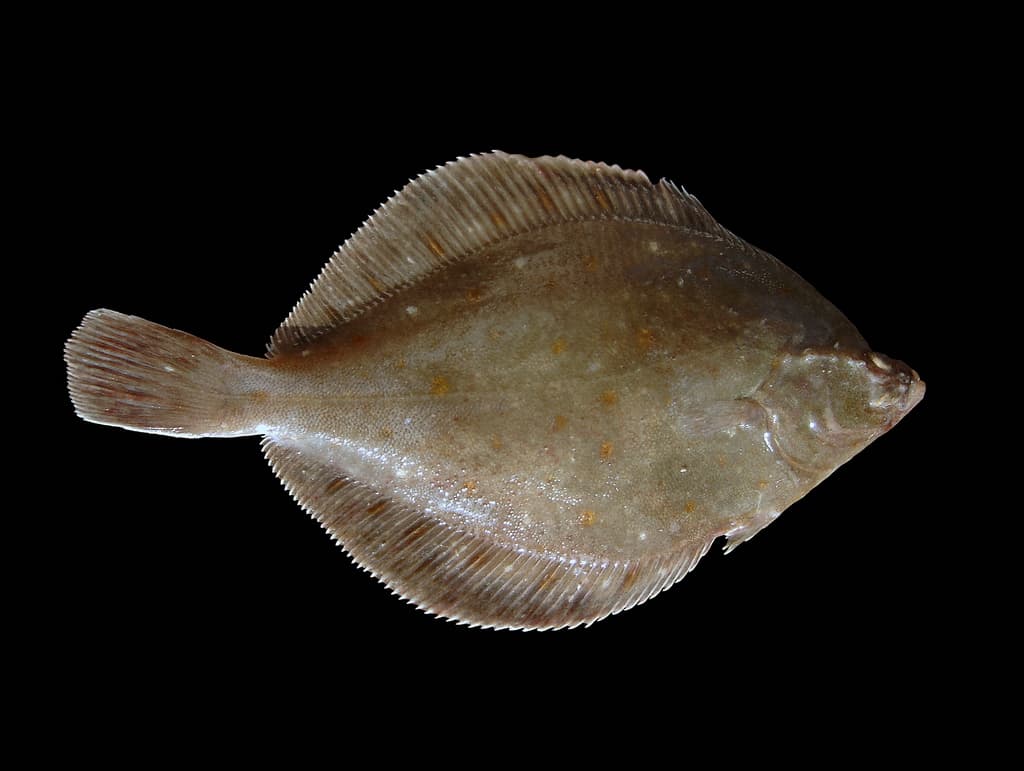
A plaice seen from above against a black background, with a brown upper side and small orange spots, and long dorsal and anal fins around the whole body
Photo: Hans Hillewaert, CC BY-SA 4.0, via Wikimedia Commons

Identification

  • Brown, smooth eyed side with many red spots.SourceFact from a specialist source · Applies to all regions1EncyclopediaStore norske leksikonrødspetteAll sources on this page
  • From the eye and backwards on the gill cover it has 4–7 bony knobs in a row.SourceFact from a specialist source · Applies to all regions1EncyclopediaStore norske leksikonrødspetteAll sources on this page
  • Right-eyed, with a white blind side.SourceFact from a specialist source · Applies to all regions2ResearchHavforskningsinstituttetRødspetteAll sources on this page

Size

  • Usually grows to 40–50 cm. Plaice have been reported up to 100 cm and 7 kg, but this is probably very rare.SourceFact from a specialist source · Applies to all regions1EncyclopediaStore norske leksikonrødspetteAll sources on this page

Diet

  • Bristle worms, shellfish, jellyfish, crustaceans, echinoderms and small fish.SourceFact from a specialist source · Applies to all regions2ResearchHavforskningsinstituttetRødspetteAll sources on this page

Life history

  • Found from the shore zone down to about 200 metres, and lives on the bottom.SourceFact from a specialist source · Applies to all regions2ResearchHavforskningsinstituttetRødspetteAll sources on this page
  • In summer the plaice live in shallow water, and in winter in deeper areas in the fjords and on the coastal banks.SourceFact from a specialist source · Applies to all regions1EncyclopediaStore norske leksikonrødspetteAll sources on this page
  • Spawns at 50–200 metres depth. The youngest fish live in shallow water on sandy bottom.SourcesFact from a specialist source · Applies to all regions1EncyclopediaStore norske leksikonrødspette2ResearchHavforskningsinstituttetRødspetteAll sources on this page
  • The female grows much faster than the male and becomes considerably larger.SourceFact from a specialist source · Applies to all regions2ResearchHavforskningsinstituttetRødspetteAll sources on this page
  • Can live to more than 20 years.SourceFact from a specialist source · Applies to all regions2ResearchHavforskningsinstituttetRødspetteAll sources on this page

The stock

  • The Red List status in Norway is viable (LC).SourceFact from a specialist source · Applies to all regions1EncyclopediaStore norske leksikonrødspetteAll sources on this page
  • The fishery in the North Sea is strictly regulated after the species was heavily overfished for a period.SourceFact from a specialist source · Applies to all regions1EncyclopediaStore norske leksikonrødspetteAll sources on this page

Experiences

Tips from people who have fished for European plaice

From other anglers

Loading tips …

Experiences from readers. They have been read through, but not checked against sources, and do not count towards the source requirement. You will find rules only in the rules section. Tips are shown in the language they were written in, usually Norwegian.

Share an experience

Have you caught European plaice? Tell us what worked for you.

Sources

What this page is based on

The numbers in the text refer to the sources below. Fishing tips must be confirmed by at least three independent sources. Read about our source requirements.

  1. 1
    EncyclopediaStore norske leksikon
    rødspette

    Per Pethon og Leif Asbjørn Vøllestad · Read 29 September 2026

  2. 2
    ResearchHavforskningsinstituttet
    Rødspette

    Published 28 March 2019 · Read 29 September 2026

  3. 3
    ExperienceAsgeir Alvestad
    Fiske etter flyndrer, tips og triks

    Asgeir Alvestad · Published 21 January 2020 · Read 29 September 2026

  4. 4
    ExperienceVillmarksbutikken
    Flyndrefiske fra land og båt – utstyr og tips

    Erik Olsen · Published 2 August 2023 · Read 29 September 2026

  5. 5
    OrganisationNorges Jeger- og Fiskerforbund
    Slik får du fisk i saltvann

    Read 29 September 2026

  6. 6
    Experienceasgeiralvestad.no
    Slik fisker du torsk, tips og triks

    Asgeir Alvestad · Read 29 September 2026

  7. 7
    AuthorityFiskeridirektoratet
    Minstemål i fritidsfiske

    Read 29 September 2026

  8. 8
    AuthorityFiskeridirektoratet
    Freda og delvis freda artar

    Read 29 September 2026

  9. 9
  10. 10
  11. 11
    AuthorityFiskeridirektoratet
    Oslofjorden: tiltak for fritidsfiskere

    Read 29 September 2026

  12. 12
  13. 13
    AuthorityFiskeridirektoratet
    Generelle reglar

    Read 29 September 2026