Scophthalmus maximusSourceFact from a specialist source · Applies to all regions1ResearchHavforskningsinstituttetPiggvarAll sources on this page
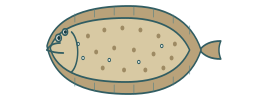
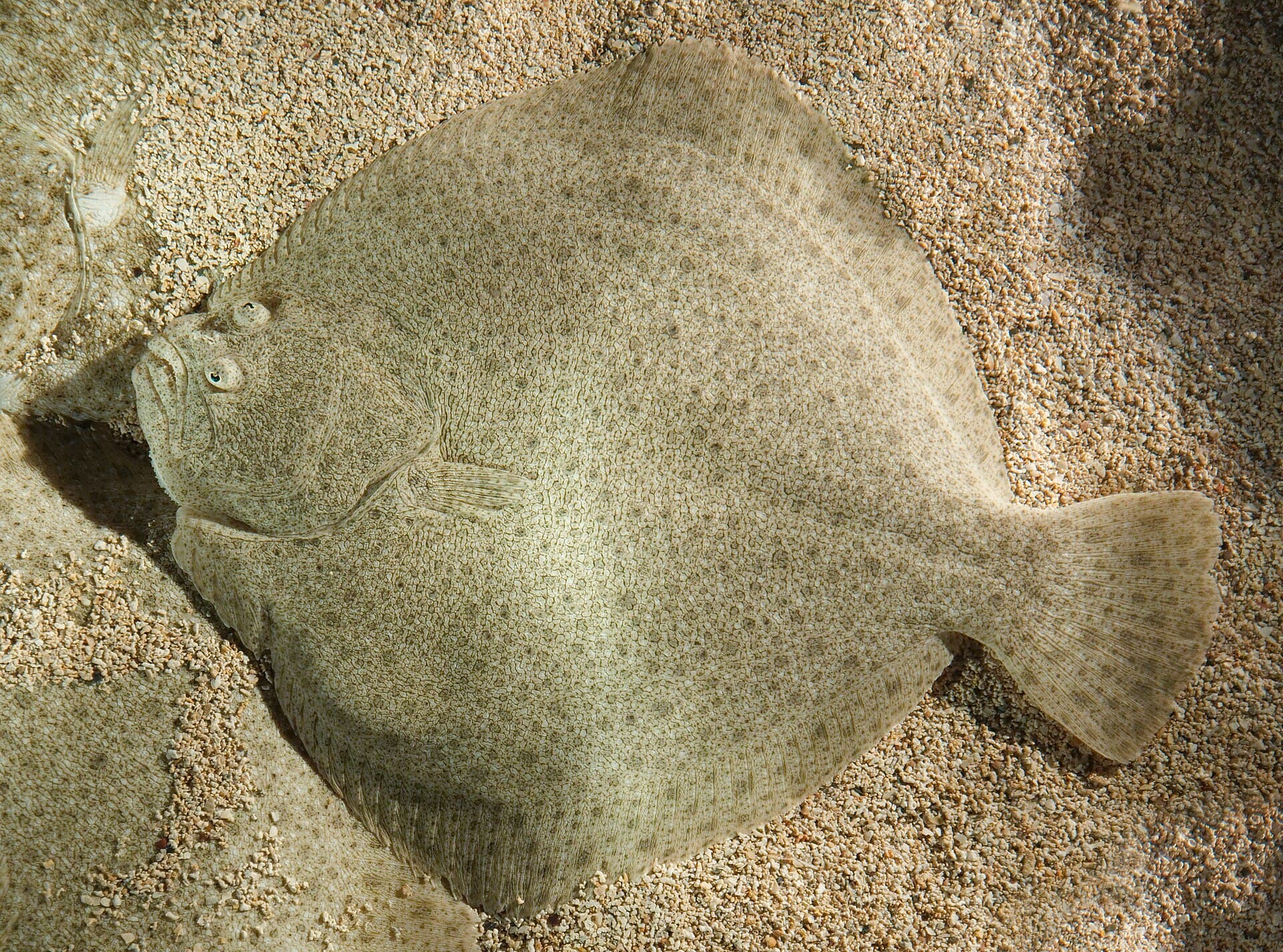
Turbot is one of the largest flatfish in our waters, a left-eyed and keen predator with bony knobs on the eyed side.SourcesFact from a specialist source · Applies to all regions1ResearchHavforskningsinstituttetPiggvar2EncyclopediaStore norske leksikonpiggvarAll sources on this page
Southern and Eastern Norway: present.SourcesFact from a specialist source · Applies to all regions1ResearchHavforskningsinstituttetPiggvar2EncyclopediaStore norske leksikonpiggvarAll sources on this page
Western Norway: present.SourcesFact from a specialist source · Applies to all regions1ResearchHavforskningsinstituttetPiggvar2EncyclopediaStore norske leksikonpiggvarAll sources on this page
Central Norway: present.SourcesFact from a specialist source · Applies to all regions1ResearchHavforskningsinstituttetPiggvar2EncyclopediaStore norske leksikonpiggvarAll sources on this page
Northern Norway: present. Store norske leksikon gives distribution north to the Helgeland coast, and the Institute of Marine Research from Northern Norway.SourcesFact from a specialist source · Applies to all regions1ResearchHavforskningsinstituttetPiggvar2EncyclopediaStore norske leksikonpiggvarAll sources on this page
Found in
Bottom
Best season
Apr–Jun
Methods
Active fishing with bait or artificial lures
Rules checked
29 September 2026
Getting started
Your first try for turbot
One recommended starting point: active fishing with bait or artificial lures from shore or from a boat. More methods are listed under “How to fish”.
Elongated soft-plastic shads that imitate sand eel (10–20 cm) work, and Alvestad prefers long sand eel imitations that small cod cannot swallow so easily.SourcesTackle advice from a source of experience · Applies to all regions3ExperienceJakt & FiskeEffektivt piggvarfiske4ExperienceAsgeir AlvestadTips og triks for piggvar og slettvarAll sources on this page
Østfold to Agder (the Skagerrak coast)SourcesFact from a specialist source · Applies to all regions1ResearchHavforskningsinstituttetPiggvar2EncyclopediaStore norske leksikonpiggvarAll sources on this page
Western NorwayPresent
Rogaland and Vestland, south of StadSourcesFact from a specialist source · Applies to all regions1ResearchHavforskningsinstituttetPiggvar2EncyclopediaStore norske leksikonpiggvarAll sources on this page
Central NorwayPresent
Møre og Romsdal and TrøndelagSourcesFact from a specialist source · Applies to all regions1ResearchHavforskningsinstituttetPiggvar2EncyclopediaStore norske leksikonpiggvarAll sources on this page
Northern NorwayPresent
Store norske leksikon gives distribution north to the Helgeland coast, and the Institute of Marine Research from Northern Norway.SourcesFact from a specialist source · Applies to all regions1ResearchHavforskningsinstituttetPiggvar2EncyclopediaStore norske leksikonpiggvarAll sources on this page
Elongated soft-plastic shads that imitate sand eel (10–20 cm) work, and Alvestad prefers long sand eel imitations that small cod cannot swallow so easily.SourcesTackle advice from a source of experience · Applies to all regions3ExperienceJakt & FiskeEffektivt piggvarfiske4ExperienceAsgeir AlvestadTips og triks for piggvar og slettvarAll sources on this page
Showing rules for the whole coast. Rules that apply to only part of the coast are labelled.Showing rules for Southern and Eastern Norway (Østfold to Agder (the Skagerrak coast)).Showing rules for Western Norway (Rogaland and Vestland, south of Stad).Showing rules for Central Norway (Møre og Romsdal and Trøndelag).Showing rules for Northern Norway (Nordland, Troms and Finnmark).
→Turbot is not in the Directorate of Fisheries’ overview of minimum sizes for the most common species in recreational fishing.SourceRule from the authorities · Applies to all regions8AuthorityFiskeridirektoratetMinstemål i fritidsfiskeAll sources on this page
→Turbot is not on the Directorate of Fisheries’ overview of protected and partially protected species.SourceRule from the authorities · Applies to all regions9AuthorityFiskeridirektoratetFreda og delvis freda artarAll sources on this page
→It is prohibited to fish closer than 100 metres to fish farms.SourceRule from the authorities · Applies to all regions14AuthorityFiskeridirektoratetGenerelle reglarAll sources on this page
→It is not permitted to use live fish or other live animals as bait.SourceRule from the authorities · Applies to all regions14AuthorityFiskeridirektoratetGenerelle reglarAll sources on this page
→Northern NorwaySeparate local restrictions may apply, for example for the cod fishery in Lofoten.SourceRule from the authorities · Applies to: Northern Norway14AuthorityFiskeridirektoratetGenerelle reglarAll sources on this page
The rules are translated from Norwegian. Only the Norwegian text and the authorities’ own pages (in Norwegian) are authoritative. Check them before your trip.
Not checked: rules in national parks and other protected areas at sea and local rules adopted by the municipality. The regulations may change, so always check the current rules before your trip.
→Left-eyed: both eyes are on the left side.SourceFact from a specialist source · Applies to all regions2EncyclopediaStore norske leksikonpiggvarAll sources on this page
→The eyed side has numerous bony knobs, and they replace the scales.SourcesFact from a specialist source · Applies to all regions1ResearchHavforskningsinstituttetPiggvar2EncyclopediaStore norske leksikonpiggvarAll sources on this page
→Brown-speckled, deep body.SourceFact from a specialist source · Applies to all regions1ResearchHavforskningsinstituttetPiggvarAll sources on this page
Size
→Can weigh 25 kg and measure 1 metre.SourceFact from a specialist source · Applies to all regions2EncyclopediaStore norske leksikonpiggvarAll sources on this page
Diet
→Fish such as sand eel, herring, sprat and whiting.SourceFact from a specialist source · Applies to all regions1ResearchHavforskningsinstituttetPiggvarAll sources on this page
Life history
→As an adult, the turbot hunts actively and passively for fish such as sand eel, herring, sprat and whiting.SourceFact from a specialist source · Applies to all regions1ResearchHavforskningsinstituttetPiggvarAll sources on this page
→Females are the largest and grow fastest.SourceFact from a specialist source · Applies to all regions1ResearchHavforskningsinstituttetPiggvarAll sources on this page
→Fish ready to spawn, from 4–5 years of age, usually stay in deeper water down to 80 metres. In spring the spawning stock moves towards shallower water to spawn.SourceFact from a specialist source · Applies to all regions1ResearchHavforskningsinstituttetPiggvarAll sources on this page
→The larva settles on the bottom in shallow water, usually no more than 1 metre deep. In the first autumn, when the juvenile is 8–10 cm, it moves towards deeper water.SourceFact from a specialist source · Applies to all regions1ResearchHavforskningsinstituttetPiggvarAll sources on this page
The stock
→Turbot is usually caught as bycatch in other fisheries.SourceFact from a specialist source · Applies to all regions1ResearchHavforskningsinstituttetPiggvarAll sources on this page
→The Norwegian fishery is insignificant, while 4,000–5,000 tonnes are regularly caught in the North Sea.SourceFact from a specialist source · Applies to all regions2EncyclopediaStore norske leksikonpiggvarAll sources on this page
Experiences
Tips from people who have fished for turbot
From other anglers
Loading tips …
Experiences from readers. They have been read through, but not checked against sources, and do not count towards the source requirement. You will find rules only in the rules section. Tips are shown in the language they were written in, usually Norwegian.
Share an experience
Have you caught turbot? Tell us what worked for you.
Sources
What this page is based on
The numbers in the text refer to the sources below. Fishing tips must be confirmed by at least three independent sources. Read about our source requirements.