Scomber scombrusSourcesFact from a specialist source · Applies to all regions1ResearchHavforskningsinstituttetMakrell2EncyclopediaStore norske leksikonmakrellAll sources on this page
Also called (Norwegian names)pirSourcesFact from a specialist source · Applies to all regions1ResearchHavforskningsinstituttetMakrell2EncyclopediaStore norske leksikonmakrellAll sources on this page
The mackerel is a fast-swimming schooling fish that lives in open water, and in Norway it is common from April/May to October.SourcesFact from a specialist source · Applies to all regions1ResearchHavforskningsinstituttetMakrell2EncyclopediaStore norske leksikonmakrellAll sources on this page
Southern and Eastern Norway: common.SourceFact from a specialist source · Applies to all regions2EncyclopediaStore norske leksikonmakrellAll sources on this page
Western Norway: common.SourceFact from a specialist source · Applies to all regions2EncyclopediaStore norske leksikonmakrellAll sources on this page
Central Norway: common. Common north to the Trondheimsfjord.SourceFact from a specialist source · Applies to all regions2EncyclopediaStore norske leksikonmakrellAll sources on this page
Northern Norway: present. Found as far north as Finnmark, but most common from Skagerrak to the Trondheimsfjord.SourceFact from a specialist source · Applies to all regions2EncyclopediaStore norske leksikonmakrellAll sources on this page
Found in
Surface and open water
Best season
Jun–Sep
Methods
Lure with a hekle, Black hooks, Trolling, Float fishing
Rules checked
29 September 2026
Getting started
Your first try for Atlantic mackerel
One recommended starting point: lure with a hekle from a boat or from shore. More methods are listed under “How to fish”.
Østfold to Agder (the Skagerrak coast)SourceFact from a specialist source · Applies to all regions2EncyclopediaStore norske leksikonmakrellAll sources on this page
Western NorwayCommon
Rogaland and Vestland, south of StadSourceFact from a specialist source · Applies to all regions2EncyclopediaStore norske leksikonmakrellAll sources on this page
Central NorwayCommon
Common north to the Trondheimsfjord.SourceFact from a specialist source · Applies to all regions2EncyclopediaStore norske leksikonmakrellAll sources on this page
Northern NorwayPresent
Found as far north as Finnmark, but most common from Skagerrak to the Trondheimsfjord.SourceFact from a specialist source · Applies to all regions2EncyclopediaStore norske leksikonmakrellAll sources on this page
→In Norway the mackerel is common from April/May to October, from Skagerrak to the Trondheimsfjord.SourceFact from a specialist source · Applies to all regions2EncyclopediaStore norske leksikonmakrellAll sources on this page
→Spring mackerel have around 3 per cent fat, while autumn mackerel can have around 30 per cent.SourceFact from a specialist source · Applies to all regions2EncyclopediaStore norske leksikonmakrellAll sources on this page
Showing rules for the whole coast. Rules that apply to only part of the coast are labelled.Showing rules for Southern and Eastern Norway (Østfold to Agder (the Skagerrak coast)).Showing rules for Western Norway (Rogaland and Vestland, south of Stad).Showing rules for Central Norway (Møre og Romsdal and Trøndelag).Showing rules for Northern Norway (Nordland, Troms and Finnmark).
→There is no minimum size for mackerel for recreational fishers, as long as the catch is not to be sold.SourceRule from the authorities · Applies to all regions12AuthorityFiskeridirektoratetMinstemål i fritidsfiskeAll sources on this page
→Mackerel is not on the Directorate of Fisheries’ list of protected and partially protected species.SourceRule from the authorities · Applies to all regions13AuthorityFiskeridirektoratetFreda og delvis freda artarAll sources on this page
→It is prohibited to fish closer than 100 metres to fish farms.SourceRule from the authorities · Applies to all regions18AuthorityFiskeridirektoratetGenerelle reglarAll sources on this page
→It is not permitted to use live fish or other live animals as bait.SourceRule from the authorities · Applies to all regions18AuthorityFiskeridirektoratetGenerelle reglarAll sources on this page
→Northern NorwaySeparate local restrictions may apply, for example for the cod fishery in Lofoten.SourceRule from the authorities · Applies to: Northern Norway18AuthorityFiskeridirektoratetGenerelle reglarAll sources on this page
The rules are translated from Norwegian. Only the Norwegian text and the authorities’ own pages (in Norwegian) are authoritative. Check them before your trip.
Not checked: rules in national parks and other protected areas at sea and local rules adopted by the municipality. The regulations may change, so always check the current rules before your trip.
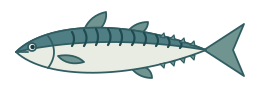
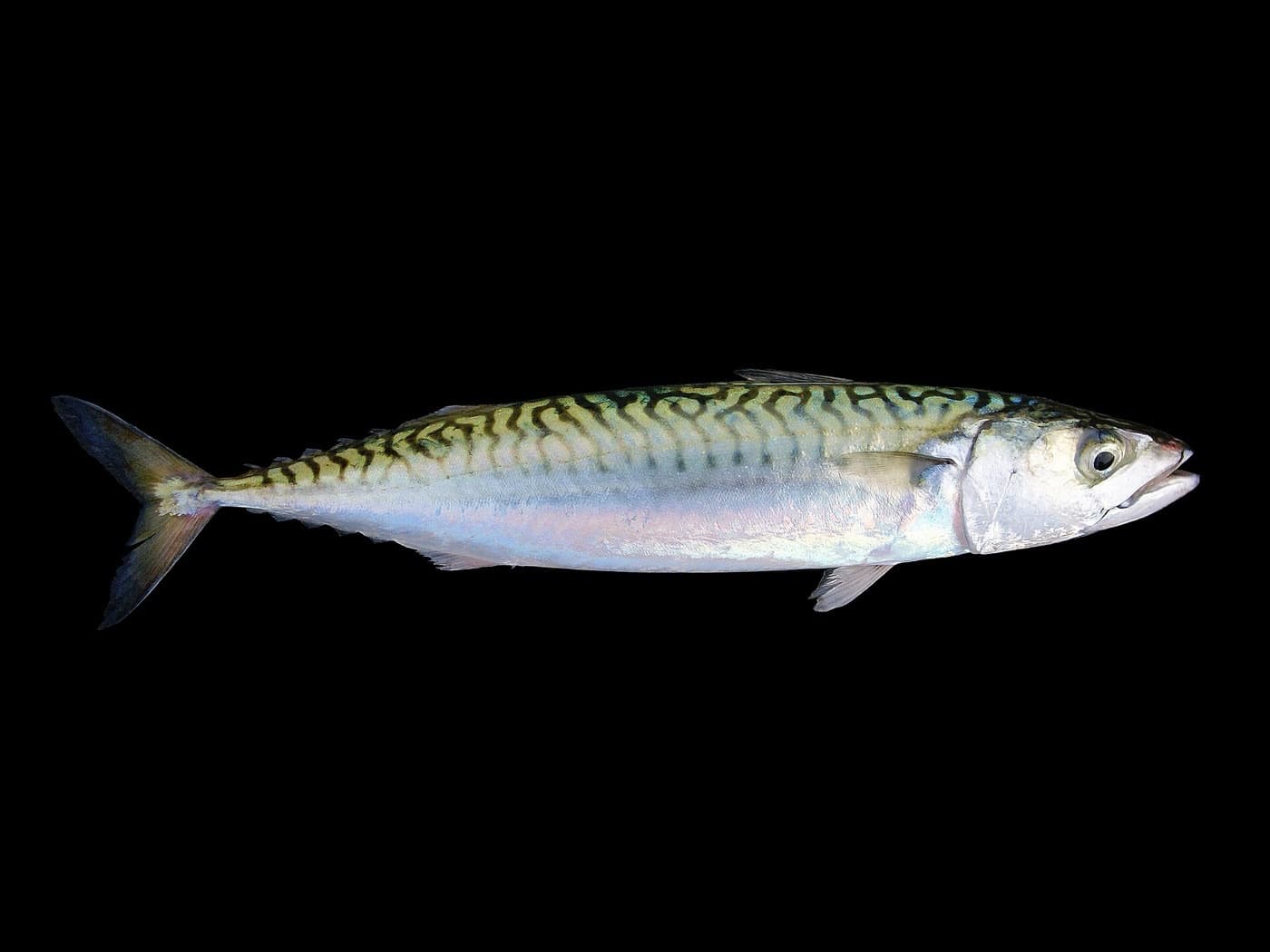
→Spindle-shaped, streamlined body. The back is green or blue, with a series of irregular dark cross bands.SourceFact from a specialist source · Applies to all regions1ResearchHavforskningsinstituttetMakrellAll sources on this page
→Small, separate finlets between the dorsal and anal fins and the tail fin.SourceFact from a specialist source · Applies to all regions2EncyclopediaStore norske leksikonmakrellAll sources on this page
→Small scales and soft skin.SourceFact from a specialist source · Applies to all regions1ResearchHavforskningsinstituttetMakrellAll sources on this page
Size
→Rarely longer than 50 cm or heavier than 1 kg.SourcesFact from a specialist source · Applies to all regions1ResearchHavforskningsinstituttetMakrell2EncyclopediaStore norske leksikonmakrellAll sources on this page
→Can reach up to 65–70 cm and 3.5 kg.SourceFact from a specialist source · Applies to all regions1ResearchHavforskningsinstituttetMakrellAll sources on this page
Diet
→Zooplankton such as the copepod raudåte and krill, fish larvae and small fish.SourcesFact from a specialist source · Applies to all regions1ResearchHavforskningsinstituttetMakrell2EncyclopediaStore norske leksikonmakrellAll sources on this page
Life history
→Has no swim bladder and must keep swimming all the time so as not to sink.SourceFact from a specialist source · Applies to all regions1ResearchHavforskningsinstituttetMakrellAll sources on this page
→In spring it first appears off the coast and gradually moves into the fjords. Small mackerel largely overwinter in the fjords of Southern Norway, while the large mackerel leaves the coast in autumn.SourceFact from a specialist source · Applies to all regions2EncyclopediaStore norske leksikonmakrellAll sources on this page
→Prefers water warmer than 6 °C, but tolerates much colder water.SourceFact from a specialist source · Applies to all regions1ResearchHavforskningsinstituttetMakrellAll sources on this page
→Becomes sexually mature at about 30 cm and 2–3 years of age. In the North Sea it spawns from mid-May to late July.SourceFact from a specialist source · Applies to all regions1ResearchHavforskningsinstituttetMakrellAll sources on this page
The stock
→Since 2010 more mackerel has been caught than ICES has recommended, and the amount and distribution of mackerel have declined significantly over the last ten years.SourceFact from a specialist source · Applies to all regions1ResearchHavforskningsinstituttetMakrellAll sources on this page
→The recommended quota for 2026 is 174,357 tonnes. For 2025 it was 576,958 tonnes.SourceFact from a specialist source · Applies to all regions1ResearchHavforskningsinstituttetMakrellAll sources on this page
Experiences
Tips from people who have fished for Atlantic mackerel
From other anglers
Loading tips …
Experiences from readers. They have been read through, but not checked against sources, and do not count towards the source requirement. You will find rules only in the rules section. Tips are shown in the language they were written in, usually Norwegian.
Share an experience
Have you caught Atlantic mackerel? Tell us what worked for you.
Sources
What this page is based on
The numbers in the text refer to the sources below. Fishing tips must be confirmed by at least three independent sources. Read about our source requirements.