Molva molvaSourceFact from a specialist source · Applies to all regions1ResearchHavforskningsinstituttetLangeAll sources on this page
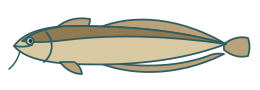
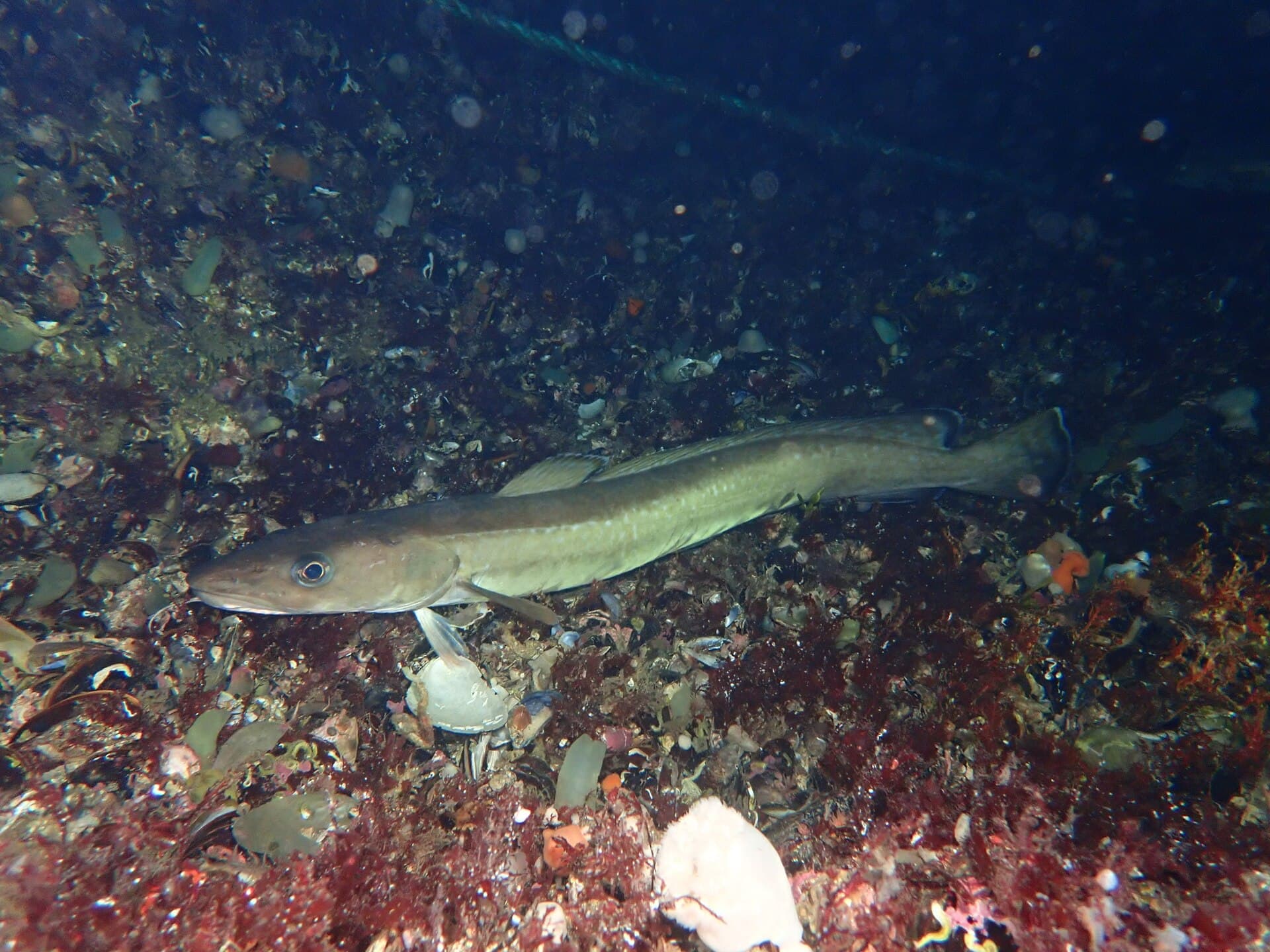
Ling is an elongated fish with a long barbel that lives near the bottom in relatively deep water.SourcesFact from a specialist source · Applies to all regions1ResearchHavforskningsinstituttetLange2EncyclopediaStore norske leksikonlangeAll sources on this page
Southern and Eastern Norway: present.SourceFact from a specialist source · Applies to all regions1ResearchHavforskningsinstituttetLangeAll sources on this page
Western Norway: present.SourcesFact from a specialist source · Applies to all regions1ResearchHavforskningsinstituttetLange2EncyclopediaStore norske leksikonlangeAll sources on this page
Central Norway: present.SourcesFact from a specialist source · Applies to all regions1ResearchHavforskningsinstituttetLange2EncyclopediaStore norske leksikonlangeAll sources on this page
Northern Norway: present.SourcesFact from a specialist source · Applies to all regions1ResearchHavforskningsinstituttetLange2EncyclopediaStore norske leksikonlangeAll sources on this page
Found in
Bottom
Best season
Jan–Dec
Methods
Boom rig and trace with bait
Rules checked
29 September 2026
Getting started
Your first try for ling
One recommended starting point: boom rig and trace with bait from a boat. More methods are listed under “How to fish”.
1. Place and time
Ling thrive on hard bottom.SourcesFishing tip from a specialist source · Applies to all regions1ResearchHavforskningsinstituttetLange3ExperienceHooked.noSlik fisker du langeAll sources on this page
Best in Jan–Dec.
2. Tackle
Rod
Tip action in the class of around 20–60 lb.SourceTackle advice from a source of experience · Applies to all regions3ExperienceHooked.noSlik fisker du langeAll sources on this page
Reel and line
A heavy-duty reel that holds at least 700 metres of braided line of 0.32–0.39 mm.SourceTackle advice from a source of experience · Applies to all regions3ExperienceHooked.noSlik fisker du langeAll sources on this page
Leader
Strong monofilament of 1–1.5 mm, because teeth and the bottom cause wear.SourceTackle advice from a source of experience · Applies to all regions3ExperienceHooked.noSlik fisker du langeAll sources on this page
Attractor
A white, glow-in-the-dark tube and preferably a shiny spinner blade.SourceTackle advice from a source of experience · Applies to all regions3ExperienceHooked.noSlik fisker du langeAll sources on this page
3. Rig up: boom rig with a trace
1Main line. Braided line from the reel.SourceTackle advice from a source of experience · Applies to all regions4ExperienceNormark Norway (elbe.no)Sjøfiske fra båtAll sources on this page
2Boom. A stiff arm that keeps the bait away from the main line, so the rig does not tangle on the way down.SourceTackle advice from a source of experience · Applies to all regions4ExperienceNormark Norway (elbe.no)Sjøfiske fra båtAll sources on this page
3Sinker. Attached to the boom, keeps the rig near the bottom.SourceTackle advice from a source of experience · Applies to all regions4ExperienceNormark Norway (elbe.no)Sjøfiske fra båtAll sources on this page
4Trace. A leader of 30 cm to 1 metre from the boom out to the hook and bait.SourceTackle advice from a source of experience · Applies to all regions4ExperienceNormark Norway (elbe.no)Sjøfiske fra båtAll sources on this page
How to assemble it
→Attach the boom to the main line and the sinker to the boom.SourceTackle advice from a source of experience · Applies to all regions4ExperienceNormark Norway (elbe.no)Sjøfiske fra båtAll sources on this page
→Attach the trace to the boom. A leader of 30 cm to 1 metre makes the bait move more naturally.SourceTackle advice from a source of experience · Applies to all regions4ExperienceNormark Norway (elbe.no)Sjøfiske fra båtAll sources on this page
→Bait with oily fish, for example mackerel fillet, and fish along the bottom while the boat drifts.SourceTackle advice from a source of experience · Applies to all regions4ExperienceNormark Norway (elbe.no)Sjøfiske fra båtAll sources on this page
A length of heavier line between the main line and the bait, which withstands wear better.SourcesTackle advice from a source of experience · Applies to all regions4ExperienceNormark Norway (elbe.no)Sjøfiske fra båt7OrganisationNorges Jeger- og FiskerforbundSlik får du fisk i saltvannAll sources on this page
Where
Where to find ling
SurfaceOpen waterBottom0 m100 m200 m300 m400 m
The most relevant fishing depths are 100–400 metres. The Institute of Marine Research states that ling are most common at 300–400 metres, but can be encountered from 60 to 1000 metres.SourcesFishing tip from a specialist source · Applies to all regions1ResearchHavforskningsinstituttetLange2EncyclopediaStore norske leksikonlange3ExperienceHooked.noSlik fisker du langeAll sources on this page Highlighted: bottomSourcesFishing tip from a specialist source · Applies to all regions1ResearchHavforskningsinstituttetLange2EncyclopediaStore norske leksikonlange3ExperienceHooked.noSlik fisker du langeAll sources on this page.
How to find it
→Ling thrive on hard bottom.SourcesFishing tip from a specialist source · Applies to all regions1ResearchHavforskningsinstituttetLange3ExperienceHooked.noSlik fisker du langeAll sources on this page
Along the coast
Southern and Eastern NorwayPresent
Østfold to Agder (the Skagerrak coast)SourceFact from a specialist source · Applies to all regions1ResearchHavforskningsinstituttetLangeAll sources on this page
Western NorwayPresent
Rogaland and Vestland, south of StadSourcesFact from a specialist source · Applies to all regions1ResearchHavforskningsinstituttetLange2EncyclopediaStore norske leksikonlangeAll sources on this page
Central NorwayPresent
Møre og Romsdal and TrøndelagSourcesFact from a specialist source · Applies to all regions1ResearchHavforskningsinstituttetLange2EncyclopediaStore norske leksikonlangeAll sources on this page
Northern NorwayPresent
Nordland, Troms and FinnmarkSourcesFact from a specialist source · Applies to all regions1ResearchHavforskningsinstituttetLange2EncyclopediaStore norske leksikonlangeAll sources on this page
Tip action in the class of around 20–60 lb.SourceTackle advice from a source of experience · Applies to all regions3ExperienceHooked.noSlik fisker du langeAll sources on this page
Reel and line
A heavy-duty reel that holds at least 700 metres of braided line of 0.32–0.39 mm.SourceTackle advice from a source of experience · Applies to all regions3ExperienceHooked.noSlik fisker du langeAll sources on this page
Leader
Strong monofilament of 1–1.5 mm, because teeth and the bottom cause wear.SourceTackle advice from a source of experience · Applies to all regions3ExperienceHooked.noSlik fisker du langeAll sources on this page
Attractor
A white, glow-in-the-dark tube and preferably a shiny spinner blade.SourceTackle advice from a source of experience · Applies to all regions3ExperienceHooked.noSlik fisker du langeAll sources on this page
BestGoodPossibleRarely worthwhileSpawningSourcesFact from a specialist source · Applies to all regions1ResearchHavforskningsinstituttetLange2EncyclopediaStore norske leksikonlangeAll sources on this pageSeasonSourcesFishing tip from a specialist source · Applies to all regions1ResearchHavforskningsinstituttetLange2EncyclopediaStore norske leksikonlange3ExperienceHooked.noSlik fisker du langeAll sources on this page
The assessment covers the coast as a whole. The season can vary locally, and closed seasons may stop the fishing. See the rules further down.
Time of day
The time of day is not documented well enough to give advice.
→Ling spawn in April–June.SourcesFact from a specialist source · Applies to all regions1ResearchHavforskningsinstituttetLange2EncyclopediaStore norske leksikonlangeAll sources on this page
Rules
Minimum sizes and closed seasons
Show rules for
Showing rules for the whole coast. Rules that apply to only part of the coast are labelled.Showing rules for Southern and Eastern Norway (Østfold to Agder (the Skagerrak coast)).Showing rules for Western Norway (Rogaland and Vestland, south of Stad).Showing rules for Central Norway (Møre og Romsdal and Trøndelag).Showing rules for Northern Norway (Nordland, Troms and Finnmark).
→Ling is not mentioned in the Directorate of Fisheries’ table of minimum sizes for the most common species in recreational fishing.SourceRule from the authorities · Applies to all regions8AuthorityFiskeridirektoratetMinstemål i fritidsfiskeAll sources on this page
→Ling is not on the Directorate of Fisheries’ overview of protected and partially protected species. Blue ling is listed there and is fully protected.SourceRule from the authorities · Applies to all regions9AuthorityFiskeridirektoratetFreda og delvis freda artarAll sources on this page
→It is prohibited to fish closer than 100 metres to fish farms.SourceRule from the authorities · Applies to all regions14AuthorityFiskeridirektoratetGenerelle reglarAll sources on this page
→It is not permitted to use live fish or other live animals as bait.SourceRule from the authorities · Applies to all regions14AuthorityFiskeridirektoratetGenerelle reglarAll sources on this page
→Northern NorwaySeparate local restrictions may apply, for example for the cod fishery in Lofoten.SourceRule from the authorities · Applies to: Northern Norway14AuthorityFiskeridirektoratetGenerelle reglarAll sources on this page
The rules are translated from Norwegian. Only the Norwegian text and the authorities’ own pages (in Norwegian) are authoritative. Check them before your trip.
Not checked: rules in national parks and other protected areas at sea and local rules adopted by the municipality. The regulations may change, so always check the current rules before your trip.
→Long, slender body, with a long barbel.SourceFact from a specialist source · Applies to all regions1ResearchHavforskningsinstituttetLangeAll sources on this page
→Has one short and one long dorsal fin.SourceFact from a specialist source · Applies to all regions2EncyclopediaStore norske leksikonlangeAll sources on this page
Size
→Can grow up to 2 metres and 40 kg.SourcesFact from a specialist source · Applies to all regions1ResearchHavforskningsinstituttetLange2EncyclopediaStore norske leksikonlangeAll sources on this page
Diet
→Mainly fish.SourceFact from a specialist source · Applies to all regions1ResearchHavforskningsinstituttetLangeAll sources on this page
Life history
→Most common at 300–400 metres depth, but can be encountered from 60 to 1000 metres.SourceFact from a specialist source · Applies to all regions1ResearchHavforskningsinstituttetLangeAll sources on this page
→Juveniles live in shallower water than older ling.SourcesFact from a specialist source · Applies to all regions1ResearchHavforskningsinstituttetLange2EncyclopediaStore norske leksikonlangeAll sources on this page
→Spawns in April–June, at 100–300 metres depth.SourceFact from a specialist source · Applies to all regions1ResearchHavforskningsinstituttetLangeAll sources on this page
→Becomes sexually mature at 5–7 years of age and can probably live to 30.SourceFact from a specialist source · Applies to all regions1ResearchHavforskningsinstituttetLangeAll sources on this page
The stock
→The Norwegian ling stock is assessed as viable in the Norwegian Red List for Species.SourceFact from a specialist source · Applies to all regions2EncyclopediaStore norske leksikonlangeAll sources on this page
→Previously there was no quota regulation for Norwegian fishers in the Norwegian zone. From 2023 the Ministry of Trade, Industry and Fisheries has set regulation for fishing for ling north of 62°N.SourceFact from a specialist source · Applies to all regions1ResearchHavforskningsinstituttetLangeAll sources on this page
Experiences
Tips from people who have fished for ling
From other anglers
Loading tips …
Experiences from readers. They have been read through, but not checked against sources, and do not count towards the source requirement. You will find rules only in the rules section. Tips are shown in the language they were written in, usually Norwegian.
Share an experience
Have you caught ling? Tell us what worked for you.
Sources
What this page is based on
The numbers in the text refer to the sources below. Fishing tips must be confirmed by at least three independent sources. Read about our source requirements.