Dicentrarchus labraxSourceFact from a specialist source · Applies to all regions1EncyclopediaStore norske leksikonhavabborAll sources on this page
Sea bass is a slender, silvery predatory fish that used to be a rare visitor along the Norwegian coast, but in recent decades has become relatively common.SourceFact from a specialist source · Applies to all regions1EncyclopediaStore norske leksikonhavabborAll sources on this page
Southern and Eastern Norway: present.SourceFact from a specialist source · Applies to all regions1EncyclopediaStore norske leksikonhavabborAll sources on this page
Western Norway: present.SourceFact from a specialist source · Applies to all regions1EncyclopediaStore norske leksikonhavabborAll sources on this page
Central Norway: present.SourceFact from a specialist source · Applies to all regions1EncyclopediaStore norske leksikonhavabborAll sources on this page
Northern Norway: rare. Regularly observed up to Lofoten, and scattered records north to Finnmark.SourceFact from a specialist source · Applies to all regions1EncyclopediaStore norske leksikonhavabborAll sources on this page
Found in
Surface and open water
Best season
Aug–Oct
Methods
Lures, plugs and fly
Rules checked
29 September 2026
Getting started
Your first try for European sea bass
One recommended starting point: lures, plugs and fly from a boat or from shore. More methods are listed under “How to fish”.
Friberg uses a 9–10 foot spinning rod with casting weight up to 30–35 grams, a reel in size 3000–4000, 0.12–0.15 mm braided line and one metre of 0.35 mm fluorocarbon as leader.SourceTackle advice from a source of experience · Applies to all regions3ExperienceJakt & FriluftJakten på HavabborenAll sources on this page
2Leader. 1–2 metres of monofilament or fluorocarbon between the main line and the lure. It withstands abrasion against rock and is less visible.SourcesTackle advice from a source of experience · Applies to all regions5OrganisationNorges Jeger- og FiskerforbundSlik får du fisk i saltvann6ExperienceHooked.noTorskefiske fra land i vinterhalvåretAll sources on this page
A length of heavier line between the main line and the bait, which withstands wear better.SourcesTackle advice from a source of experience · Applies to all regions5OrganisationNorges Jeger- og FiskerforbundSlik får du fisk i saltvann8ExperienceNormark Norway (elbe.no)Sjøfiske fra båtAll sources on this page
Østfold to Agder (the Skagerrak coast)SourceFact from a specialist source · Applies to all regions1EncyclopediaStore norske leksikonhavabborAll sources on this page
Western NorwayPresent
Rogaland and Vestland, south of StadSourceFact from a specialist source · Applies to all regions1EncyclopediaStore norske leksikonhavabborAll sources on this page
Central NorwayPresent
Møre og Romsdal and TrøndelagSourceFact from a specialist source · Applies to all regions1EncyclopediaStore norske leksikonhavabborAll sources on this page
Northern NorwayRare
Regularly observed up to Lofoten, and scattered records north to Finnmark.SourceFact from a specialist source · Applies to all regions1EncyclopediaStore norske leksikonhavabborAll sources on this page
Friberg uses a 9–10 foot spinning rod with casting weight up to 30–35 grams, a reel in size 3000–4000, 0.12–0.15 mm braided line and one metre of 0.35 mm fluorocarbon as leader.SourceTackle advice from a source of experience · Applies to all regions3ExperienceJakt & FriluftJakten på HavabborenAll sources on this page
Showing rules for the whole coast. Rules that apply to only part of the coast are labelled.Showing rules for Southern and Eastern Norway (Østfold to Agder (the Skagerrak coast)).Showing rules for Western Norway (Rogaland and Vestland, south of Stad).Showing rules for Central Norway (Møre og Romsdal and Trøndelag).Showing rules for Northern Norway (Nordland, Troms and Finnmark).
→Sea bass is not in the Directorate of Fisheries’ overview of minimum sizes for the most common species in recreational fishing.SourceRule from the authorities · Applies to all regions10AuthorityFiskeridirektoratetMinstemål i fritidsfiskeAll sources on this page
→Sea bass is not on the Directorate of Fisheries’ overview of protected and partially protected species.SourceRule from the authorities · Applies to all regions11AuthorityFiskeridirektoratetFreda og delvis freda artarAll sources on this page
→It is prohibited to fish closer than 100 metres to fish farms.SourceRule from the authorities · Applies to all regions16AuthorityFiskeridirektoratetGenerelle reglarAll sources on this page
→It is not permitted to use live fish or other live animals as bait.SourceRule from the authorities · Applies to all regions16AuthorityFiskeridirektoratetGenerelle reglarAll sources on this page
→Northern NorwaySeparate local restrictions may apply, for example for the cod fishery in Lofoten.SourceRule from the authorities · Applies to: Northern Norway16AuthorityFiskeridirektoratetGenerelle reglarAll sources on this page
The rules are translated from Norwegian. Only the Norwegian text and the authorities’ own pages (in Norwegian) are authoritative. Check them before your trip.
Not checked: rules in national parks and other protected areas at sea and local rules adopted by the municipality. The regulations may change, so always check the current rules before your trip.
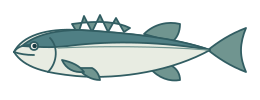
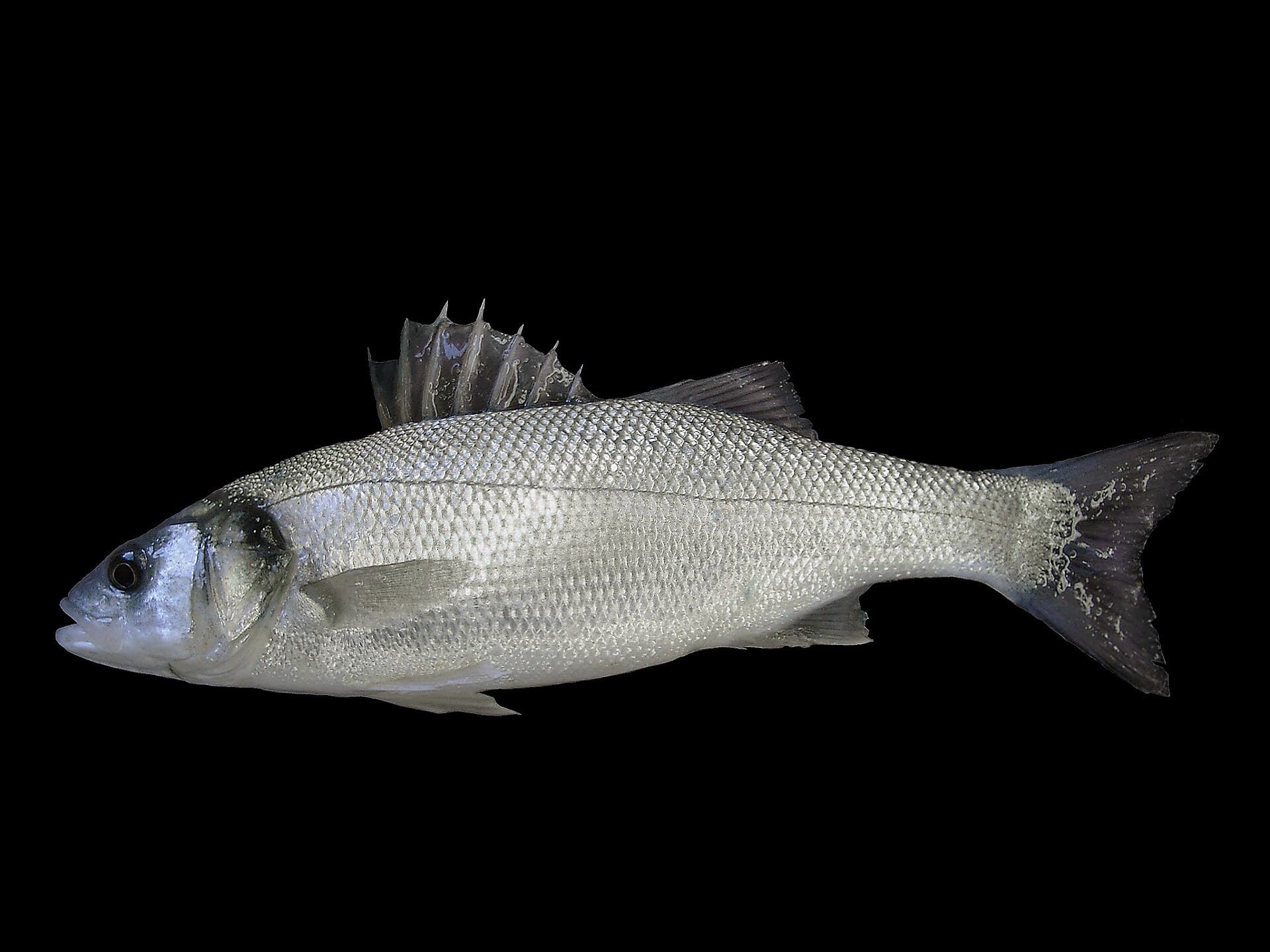
→Resembles a perch, but is slimmer and grows larger. The first dorsal fin has spines and is considerably smaller than the perch’s.SourceFact from a specialist source · Applies to all regions1EncyclopediaStore norske leksikonhavabborAll sources on this page
→Grey to silvery, darker on the back than on the belly.SourceFact from a specialist source · Applies to all regions1EncyclopediaStore norske leksikonhavabborAll sources on this page
Size
→Grows fast and can reach one metre and twelve kilos. Common length is around 50 cm, which in Norwegian waters is reached after five to seven years. Specimens of over three kilos are caught in Norway every year.SourceFact from a specialist source · Applies to all regions1EncyclopediaStore norske leksikonhavabborAll sources on this page
Diet
→Bristle worms, crustaceans, squid and fish. Larger individuals mostly eat fish, such as herring and sprat.SourceFact from a specialist source · Applies to all regions1EncyclopediaStore norske leksikonhavabborAll sources on this page
Life history
→A marine species that at times visits brackish water. Usually near the surface, preferably from 0 to 20 metres depth.SourceFact from a specialist source · Applies to all regions1EncyclopediaStore norske leksikonhavabborAll sources on this page
→Stays closer to the surface when the water is relatively warm, and seeks deeper water in winter when the water is cold.SourceFact from a specialist source · Applies to all regions1EncyclopediaStore norske leksikonhavabborAll sources on this page
→Juveniles often live in schools and are very active hunters.SourceFact from a specialist source · Applies to all regions1EncyclopediaStore norske leksikonhavabborAll sources on this page
→Becomes sexually mature at around 30 cm and spawns in spring and summer. Eggs and larvae are pelagic.SourceFact from a specialist source · Applies to all regions1EncyclopediaStore norske leksikonhavabborAll sources on this page
→The species is relatively fond of warmth, and there is reason to believe that it benefits from increasing water temperatures along the coast.SourceFact from a specialist source · Applies to all regions1EncyclopediaStore norske leksikonhavabborAll sources on this page
The stock
→The Red List status in Norway (2021) is viable (LC).SourceFact from a specialist source · Applies to all regions1EncyclopediaStore norske leksikonhavabborAll sources on this page
→The stock along the Norwegian coast increased significantly in the 2000s. More recent studies show that this is due to a very strong year class born in 1999, which has dominated the catches in the years since.SourceFact from a specialist source · Applies to all regions1EncyclopediaStore norske leksikonhavabborAll sources on this page
→It is possible that there is a small spawning stock in Norway, but this is not entirely clear. The sea bass may also come from the stock that spawns off England.SourceFact from a specialist source · Applies to all regions1EncyclopediaStore norske leksikonhavabborAll sources on this page
→Sea bass are harvested relatively heavily in more southerly areas, but the stocks are considered safe and well managed.SourceFact from a specialist source · Applies to all regions1EncyclopediaStore norske leksikonhavabborAll sources on this page
Experiences
Tips from people who have fished for European sea bass
From other anglers
Loading tips …
Experiences from readers. They have been read through, but not checked against sources, and do not count towards the source requirement. You will find rules only in the rules section. Tips are shown in the language they were written in, usually Norwegian.
Share an experience
Have you caught European sea bass? Tell us what worked for you.
Sources
What this page is based on
The numbers in the text refer to the sources below. Fishing tips must be confirmed by at least three independent sources. Read about our source requirements.
.jpg)