Thymallus thymallusSourceFact from a specialist source · Applies to all regions1EncyclopediaStore norske leksikonharrAll sources on this page
Also called (Norwegian names)horrSourceFact from a specialist source · Applies to all regions1EncyclopediaStore norske leksikonharrAll sources on this page
The grayling is a typical river fish and an excellent sport fish, especially on the fly.SourceFact from a specialist source · Applies to all regions1EncyclopediaStore norske leksikonharrAll sources on this page
Southern and Eastern Norway: present. In the Trysil watercourse, the Glomma and the Gudbrandsdalslågen with Mjøsa.SourceFact from a specialist source · Applies to all regions1EncyclopediaStore norske leksikonharrAll sources on this page
Western Norway: rare. Neither Store norske leksikon nor NJFF mentions occurrences here.SourcesFact from a specialist source · Applies to all regions1EncyclopediaStore norske leksikonharr2OrganisationNorges Jeger- og FiskerforbundHarrAll sources on this page
Central Norway: present. Has spread from Lesjaskogsvatnet down into the Rauma, and is found in several places in Trøndelag.SourceFact from a specialist source · Applies to all regions1EncyclopediaStore norske leksikonharrAll sources on this page
Northern Norway: present. Found in several places in Nordland and Finnmark.SourceFact from a specialist source · Applies to all regions1EncyclopediaStore norske leksikonharrAll sources on this page
Found in
Bottom
Best season
Jun–Oct
Methods
Worm along the bottom, Fly, Spinner and spoon
Water
River and lakeSourceFact from a specialist source · Applies to all regions1EncyclopediaStore norske leksikonharrAll sources on this page
Getting started
Your first try for grayling
One recommended starting point: worm along the bottom from shore. More methods are listed under “How to fish”.
In the Trysil watercourse, the Glomma and the Gudbrandsdalslågen with Mjøsa.SourceFact from a specialist source · Applies to all regions1EncyclopediaStore norske leksikonharrAll sources on this page
Western NorwayRare
Neither Store norske leksikon nor NJFF mentions occurrences here.SourcesFact from a specialist source · Applies to all regions1EncyclopediaStore norske leksikonharr2OrganisationNorges Jeger- og FiskerforbundHarrAll sources on this page
Central NorwayPresent
Has spread from Lesjaskogsvatnet down into the Rauma, and is found in several places in Trøndelag.SourceFact from a specialist source · Applies to all regions1EncyclopediaStore norske leksikonharrAll sources on this page
Northern NorwayPresent
Found in several places in Nordland and Finnmark.SourceFact from a specialist source · Applies to all regions1EncyclopediaStore norske leksikonharrAll sources on this page
→The grayling is an excellent sport fish on the fly.SourceFishing tip from a specialist source · Applies to all regions1EncyclopediaStore norske leksikonharrAll sources on this page
→Grayling take flies fished both dry and wet. Nymphs fished along the bottom are often best for the biggest ones.SourceTackle advice from a source of experience · Applies to all regions3ExperienceHooked.noHvordan fiske harr – art nummer 28 / 52All sources on this page
→A herring-type spoon fished near the bottom can work well for grayling over half a kilo.SourceTackle advice from a source of experience · Applies to all regions5ExperienceHooked.noHarr – en flott sportsfisk!All sources on this page
The assessment covers the country as a whole, and the season can vary locally.
Time of day
The time of day is not documented well enough to give advice.
→Grayling are fished both in open water and on the ice.SourceFact from a specialist source · Applies to all regions1EncyclopediaStore norske leksikonharrAll sources on this page
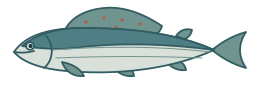
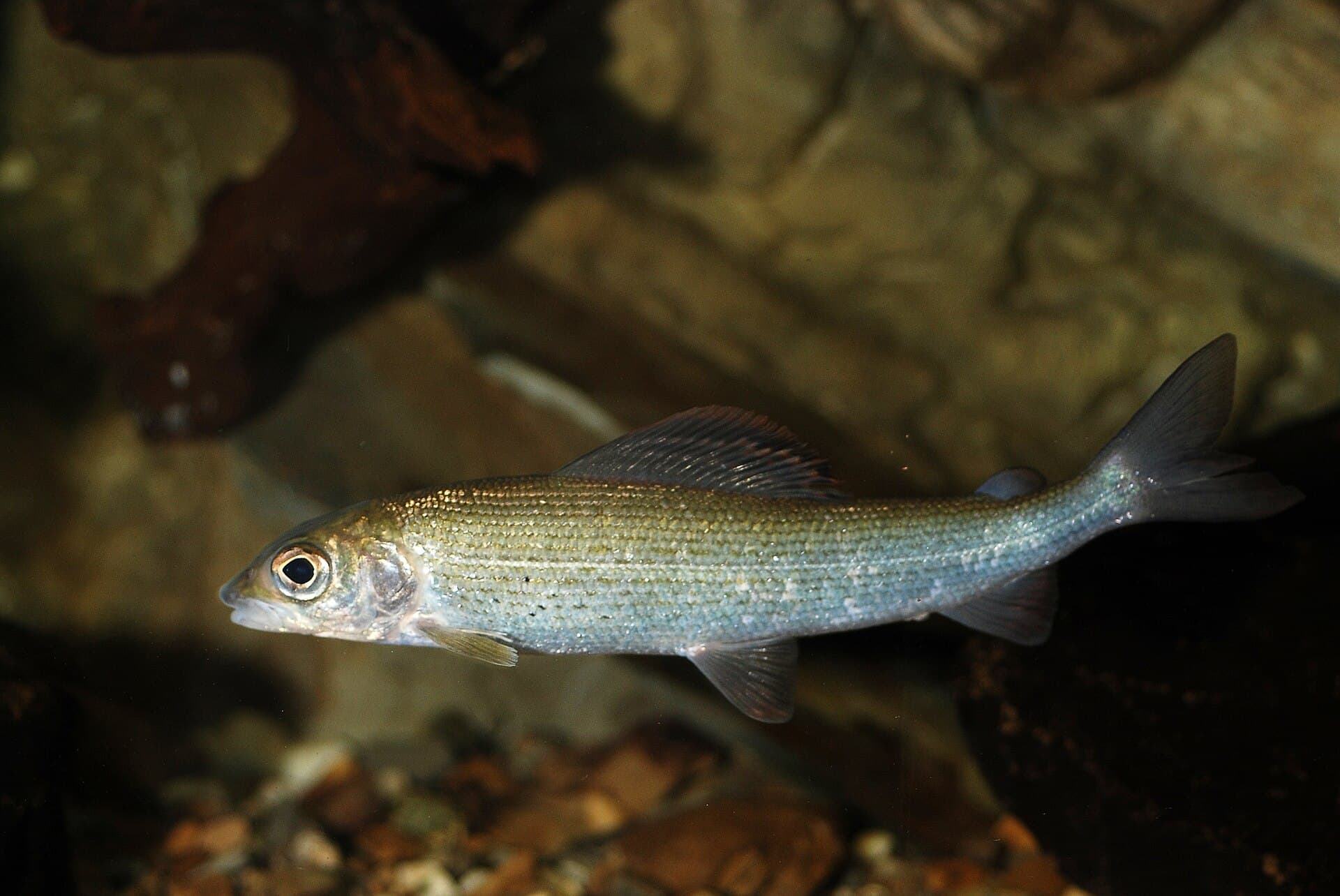
→The large dorsal fin is blue-grey with many colourful spots. The male in particular has a tall, colourful dorsal fin.SourceFact from a specialist source · Applies to all regions1EncyclopediaStore norske leksikonharrAll sources on this page
→Blue-grey or grey-brown back, often silver-grey sides with greyish lengthwise stripes, fairly large scales and a small mouth.SourceFact from a specialist source · Applies to all regions1EncyclopediaStore norske leksikonharrAll sources on this page
Size
→Mature grayling usually weigh around 300–400 grams. Grayling over 1.5 kilos are rare.SourceFact from a specialist source · Applies to all regions1EncyclopediaStore norske leksikonharrAll sources on this page
Diet
→The fry eat zooplankton and small insect larvae. Larger grayling feed on insects, molluscs and crustaceans.SourceFact from a specialist source · Applies to all regions1EncyclopediaStore norske leksikonharrAll sources on this page
Life history
→Lives its whole life in fresh water, often in large rivers, but is also found in many lakes.SourceFact from a specialist source · Applies to all regions1EncyclopediaStore norske leksikonharrAll sources on this page
→Spawns in spring, usually in running water, most often once the water temperature has passed 5 degrees, typically in May–June.SourceFact from a specialist source · Applies to all regions1EncyclopediaStore norske leksikonharrAll sources on this page
→Can migrate far in rivers in connection with spawning. Migrations of up to 125 km have been recorded in the Glomma.SourceFact from a specialist source · Applies to all regions1EncyclopediaStore norske leksikonharrAll sources on this page
The stock
→The grayling is assessed as Least Concern (LC) on the Norwegian Red List.SourceFact from a specialist source · Applies to all regions1EncyclopediaStore norske leksikonharrAll sources on this page
Experiences
Tips from people who have fished for grayling
From other anglers
Loading tips …
Experiences from readers. They have been read through, but not checked against sources, and do not count towards the source requirement. You will find rules only in the rules section. Tips are shown in the language they were written in, usually Norwegian.
Share an experience
Have you caught grayling? Tell us what worked for you.
Sources
What this page is based on
The numbers in the text refer to the sources below. Fishing tips must be confirmed by at least three independent sources. Read about our source requirements.