Esox luciusSourceFact from a specialist source · Applies to all regions1EncyclopediaStore norske leksikongjeddeAll sources on this page
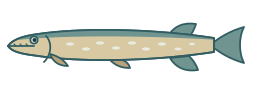
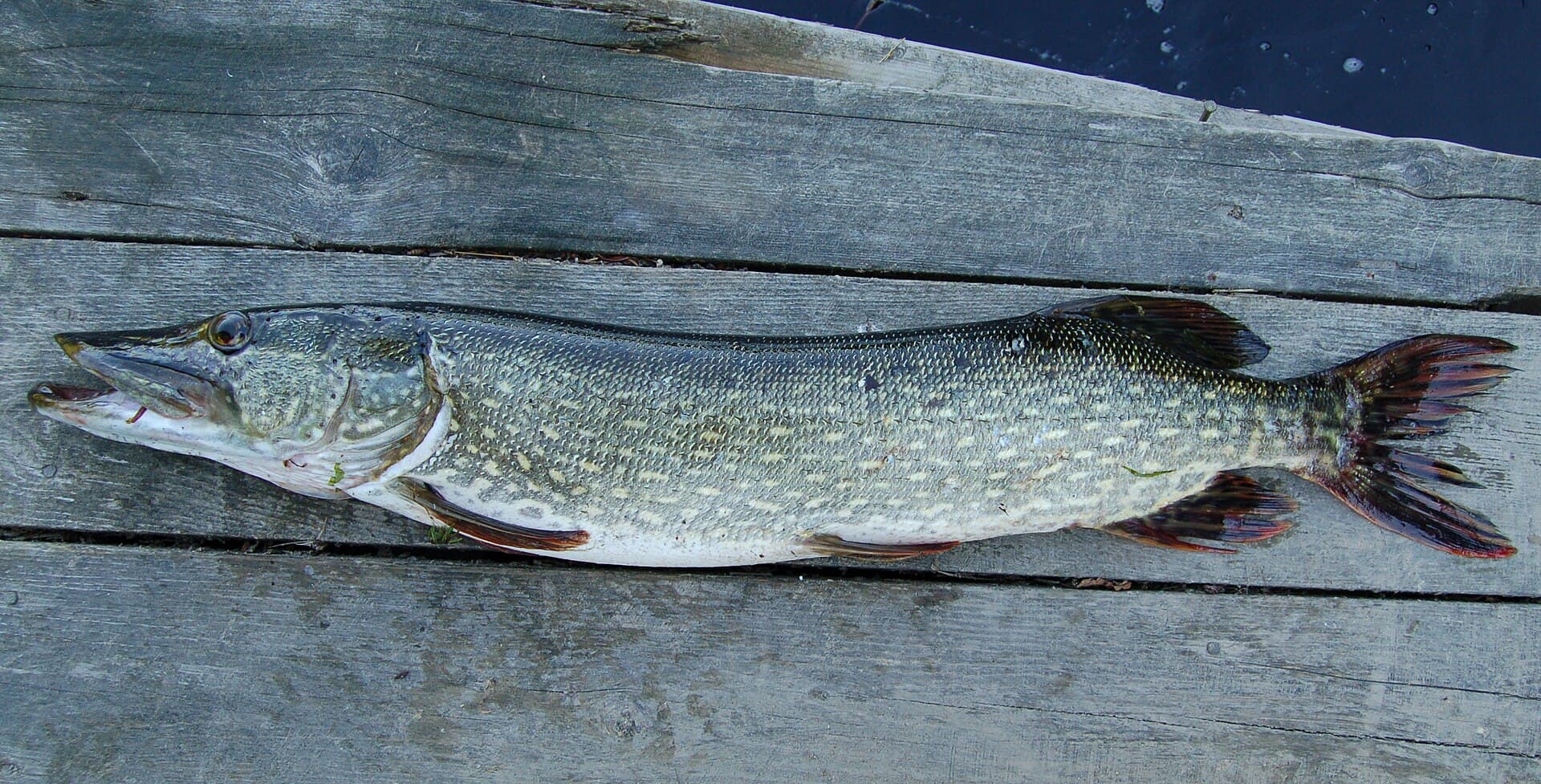
The pike is an elongated predator with a flat snout and many sharp teeth, and it feeds on fish for most of its life.SourceFact from a specialist source · Applies to all regions1EncyclopediaStore norske leksikongjeddeAll sources on this page
Southern and Eastern Norway: present. Originally in the Glomma with its tributaries and other watercourses in Østfold and Akershus. Introduced in several places in the southern coastal districts.SourceFact from a specialist source · Applies to all regions1EncyclopediaStore norske leksikongjeddeAll sources on this page
Western Norway: present. Introduced or spread to several places in the western coastal districts.SourceFact from a specialist source · Applies to all regions1EncyclopediaStore norske leksikongjeddeAll sources on this page
Central Norway: present. Introduced or spread to several places in Trøndelag.SourceFact from a specialist source · Applies to all regions1EncyclopediaStore norske leksikongjeddeAll sources on this page
Northern Norway: present. Originally in inland and eastern parts of Finnmark and in a few watercourses in Troms.SourceFact from a specialist source · Applies to all regions1EncyclopediaStore norske leksikongjeddeAll sources on this page
Found in
Bottom
Best season
May and Sep
Methods
Lures and plugs, Trolling from a boat
Water
Lake and riverSourceFact from a specialist source · Applies to all regions1EncyclopediaStore norske leksikongjeddeAll sources on this page
Getting started
Your first try for pike
One recommended starting point: lures and plugs from shore or from a boat. More methods are listed under “How to fish”.
In spring, when the water is often coloured, smaller lures with contrasting colours. Later in the year, colours that resemble the fish the pike eats there.SourceTackle advice from a source of experience · Applies to all regions5OrganisationNorges Jeger- og FiskerforbundGjeddeAll sources on this page
→With a floating crankbait you can let it rest on the surface for a few seconds and then reel in with jerks and twitches, so it behaves like an injured fish.SourceTackle advice from a source of experience · Applies to all regions2ExperienceSportsfiske.comTips og triks for gjeddefiskeAll sources on this page
Words you will meet on this page
Leader:
A length of heavier line between the main line and the bait, which withstands wear better.SourcesTackle advice from a source of experience · Applies to all regions7OrganisationNorges Jeger- og FiskerforbundSlik får du fisk i saltvann8ExperienceNormark Norway (elbe.no)Sjøfiske fra båtAll sources on this page
Originally in the Glomma with its tributaries and other watercourses in Østfold and Akershus. Introduced in several places in the southern coastal districts.SourceFact from a specialist source · Applies to all regions1EncyclopediaStore norske leksikongjeddeAll sources on this page
Western NorwayPresent
Introduced or spread to several places in the western coastal districts.SourceFact from a specialist source · Applies to all regions1EncyclopediaStore norske leksikongjeddeAll sources on this page
Central NorwayPresent
Introduced or spread to several places in Trøndelag.SourceFact from a specialist source · Applies to all regions1EncyclopediaStore norske leksikongjeddeAll sources on this page
Northern NorwayPresent
Originally in inland and eastern parts of Finnmark and in a few watercourses in Troms.SourceFact from a specialist source · Applies to all regions1EncyclopediaStore norske leksikongjeddeAll sources on this page
→With a floating crankbait you can let it rest on the surface for a few seconds and then reel in with jerks and twitches, so it behaves like an injured fish.SourceTackle advice from a source of experience · Applies to all regions2ExperienceSportsfiske.comTips og triks for gjeddefiskeAll sources on this page
In spring, when the water is often coloured, smaller lures with contrasting colours. Later in the year, colours that resemble the fish the pike eats there.SourceTackle advice from a source of experience · Applies to all regions5OrganisationNorges Jeger- og FiskerforbundGjeddeAll sources on this page
→Elongated body, a broad, flattened snout and numerous sharp teeth.SourceFact from a specialist source · Applies to all regions1EncyclopediaStore norske leksikongjeddeAll sources on this page
→Has only one dorsal fin, set far back on the body above the anal fin.SourceFact from a specialist source · Applies to all regions1EncyclopediaStore norske leksikongjeddeAll sources on this page
Size
→With plenty of food the pike grows quickly and can reach up to 20 kilos.SourceFact from a specialist source · Applies to all regions1EncyclopediaStore norske leksikongjeddeAll sources on this page
Diet
→Eats fish for most of its life. It readily takes fish up to half its own size, including other pike.SourceFact from a specialist source · Applies to all regions1EncyclopediaStore norske leksikongjeddeAll sources on this page
Life history
→Lives in lakes and slow-flowing rivers, preferably where there is a rich stock of carp fish it can eat.SourceFact from a specialist source · Applies to all regions1EncyclopediaStore norske leksikongjeddeAll sources on this page
→Spawns in spring in shallow water, preferably where there are aquatic plants.SourceFact from a specialist source · Applies to all regions1EncyclopediaStore norske leksikongjeddeAll sources on this page
→Very unsociable. It prefers water with dense growth of large aquatic plants, and defends its territory against other pike.SourceFact from a specialist source · Applies to all regions1EncyclopediaStore norske leksikongjeddeAll sources on this page
→It prefers to stand motionless among the aquatic plants, lying in wait for prey, which it attacks in a flash.SourceFact from a specialist source · Applies to all regions1EncyclopediaStore norske leksikongjeddeAll sources on this page
The stock
→The pike is assessed as Least Concern (LC) on the Norwegian Red List.SourceFact from a specialist source · Applies to all regions1EncyclopediaStore norske leksikongjeddeAll sources on this page
→In recent years pike have been found in many new lakes, probably moved there by people. The Norwegian Biodiversity Information Centre has classified the pike as a regionally alien species with high invasion potential, and the environmental authorities are trying to remove it from such waters.SourceFact from a specialist source · Applies to all regions1EncyclopediaStore norske leksikongjeddeAll sources on this page
Experiences
Tips from people who have fished for pike
From other anglers
Loading tips …
Experiences from readers. They have been read through, but not checked against sources, and do not count towards the source requirement. You will find rules only in the rules section. Tips are shown in the language they were written in, usually Norwegian.
Share an experience
Have you caught pike? Tell us what worked for you.
Sources
What this page is based on
The numbers in the text refer to the sources below. Fishing tips must be confirmed by at least three independent sources. Read about our source requirements.